About Chrysopogon zizanioides (L.) Roberty
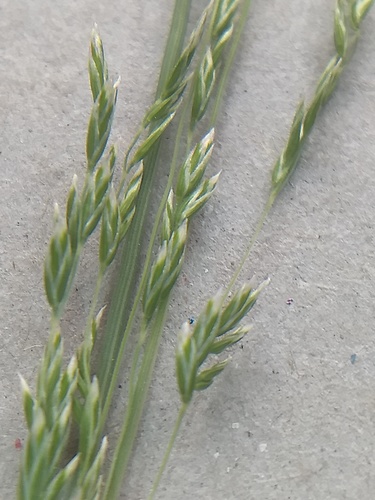
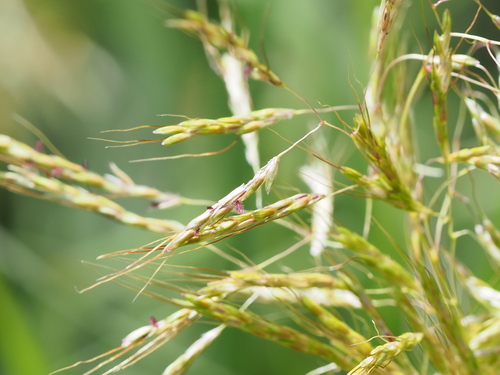
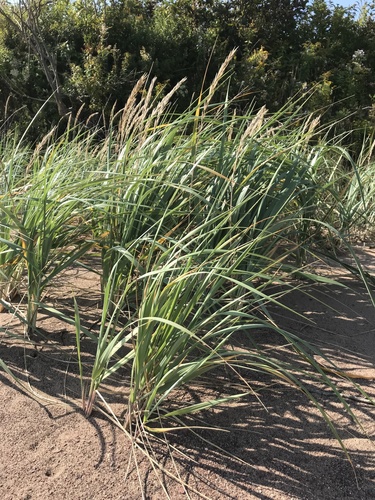
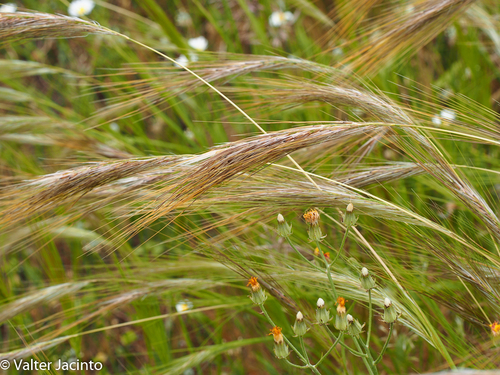
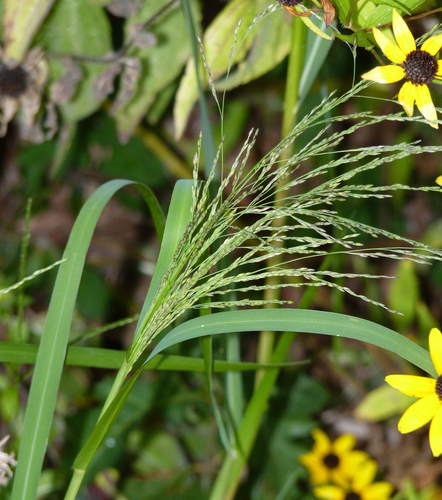
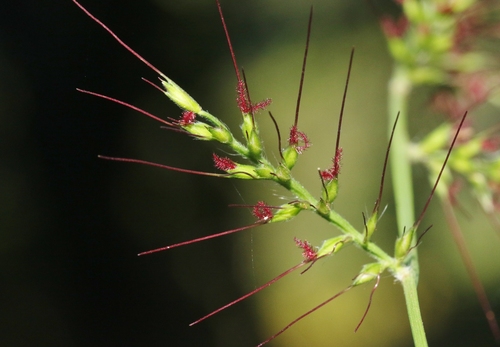
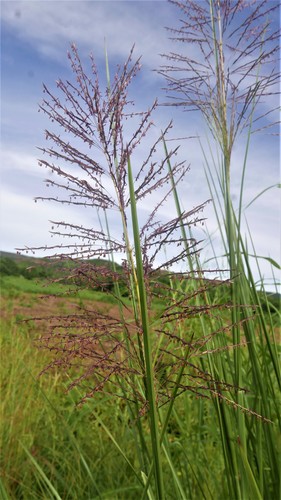
Chrysopogon zizanioides, commonly known as vetiver, typically grows 150 centimetres (5 ft) high and forms clumps of a similar width; under favorable conditions, its erect culms can reach 3 m (9.8 ft) in height. Its stems are tall, erect and stiff, while its leaves are long, thin, rather rigid, and can grow up to 300 cm (10 ft) long and 8 mm (3⁄8 in) wide. The plant produces brownish-purple flowers. Its panicles are 15–30 cm (6–12 in) long, with whorled branches that measure 25–50 mm (1–2 in) long. Spikelets grow in pairs, and each spikelet has three stamens. Unlike most grasses that form horizontally spreading, mat-like root systems, vetiver’s roots grow downward to a depth of 2–4 m (7–13 ft). The root system is finely structured, very strong, and can reach 3–4 m (10–13 ft) deep within the first year. Vetiver is a bunch grass that grows in tufts with a gregarious habit, and it does not produce stolons or rhizomes. Shoots growing from the plant’s underground crown give it resistance to frost and wildfire, and allow it to survive heavy grazing pressure. Its stiff erect stems can withstand deep water flow, and the plant can survive fully submerged under clear water for up to two months. If sediment deposits bury part of the plant, new roots can grow out of the buried nodes. All these traits make vetiver highly drought tolerant and effective at protecting soil from sheet erosion. Vetiver is originally native to India, and is widely cultivated across tropical regions. Major producers of vetiver include Haiti, India, Indonesia, and Réunion, a part of the Mascarene Islands east of Madagascar. The most common commercial vetiver genotypes are sterile. Since vetiver propagates via small offsets rather than underground stolons, these sterile genotypes are noninvasive and can be easily controlled by cultivating soil along the boundary of vetiver hedges. However, fertile vetiver genotypes have become invasive, so careful management is required. Almost all vetiver grown worldwide is propagated vegetatively, and DNA profiling has confirmed that nearly all cultivated commercial vetiver is the same nonfertile cultigen. In the United States, this cultivar is named 'Sunshine', after the town of Sunshine, Louisiana. Vetiver is grown for a wide range of purposes. It stabilizes and protects soil from erosion, and can also help protect agricultural fields from pests and weeds. Its traits make it suitable for use as animal feed. Oil extracted from vetiver roots is used in cosmetics, aromatherapy, herbal skincare, and ayurvedic soap. Its fibrous structure makes it useful for creating handicrafts, ropes, and other products. As a flavoring, vetiver (called khus) is most often used to make khus syrup. Khus essence, a dark green thick syrup produced from vetiver roots, is combined with sugar, water, and citric acid syrup to make the final khus syrup. Khus syrup has a woody taste and the characteristic scent of vetiver, and is used to flavor milkshakes, yogurt drinks like lassi, ice creams, mixed beverages such as Shirley Temples, and as a dessert topping. Khus syrup itself does not require refrigeration, though finished khus-flavored products may need to be stored chilled. Vetiver has a history of use in traditional medicine across South Asia (India, Pakistan, Sri Lanka), Southeast Asia (Malaysia, Indonesia, Thailand), and West Africa; old Tamil literature specifically mentions the use of vetiver for medical purposes. Other uses of vetiver grass include use as roof thatch, where it lasts longer than other thatching materials, and as an additive in mud bricks for housing, where it reduces the bricks’ thermal conductivity. It is also processed into strings and ropes, and grown as an ornamental plant valued for its light purple flowers. In Hindu temples, garlands woven from vetiver grass are used to adorn the murti of Lord Nataraja (Shiva), and it is a common favorite offering for Ganesha. In Sub-Saharan Africa, vetiver oil has been used in research tracking mosquito habitats during dry seasons: researchers tagged mosquitoes with vetiver oil-soaked strings before releasing them, and scent-trained dogs (a species not native to Africa) located the marked mosquitoes in sites including tree hollows and abandoned termite mounds.