About Chrysodeixis chalcites (Esper, 1789)
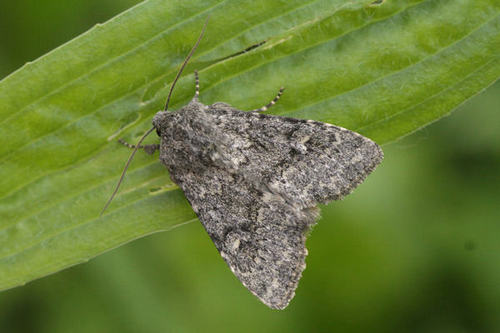
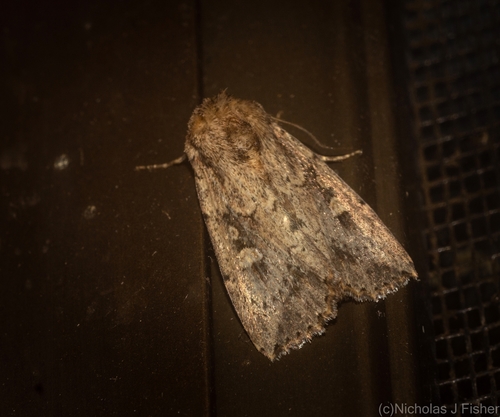
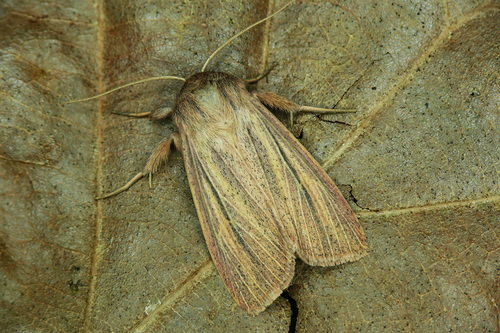
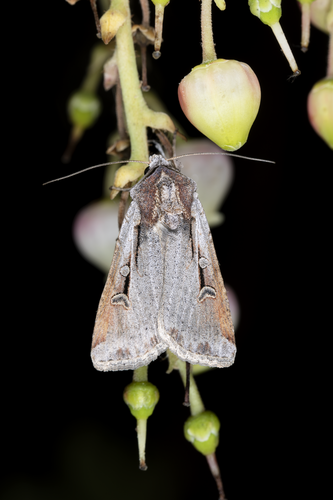
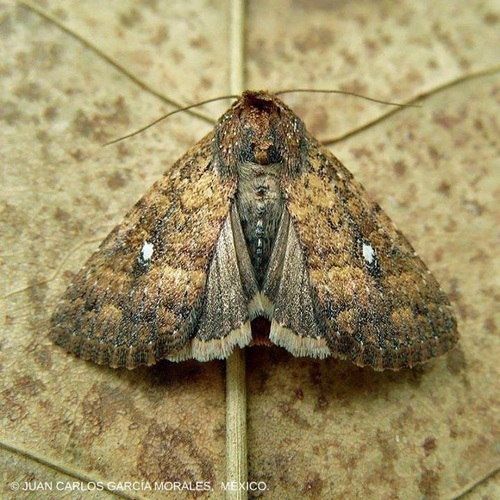
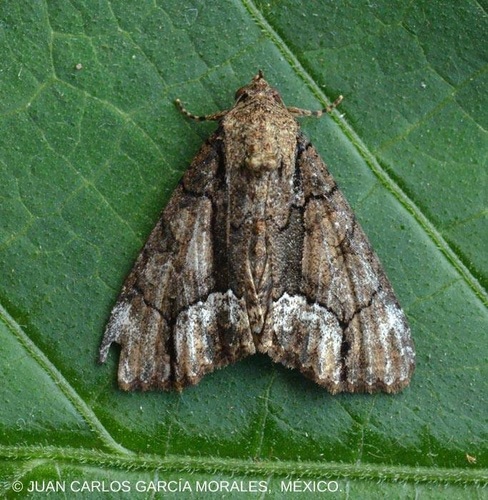
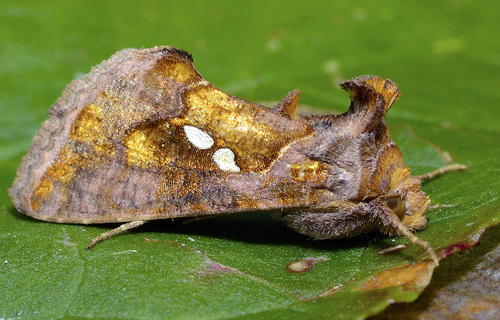
Chrysodeixis chalcites, commonly called the tomato looper or golden twin-spot moth, is a moth species belonging to the family Noctuidae, subfamily Plusiinae. It primarily inhabits southern Europe, the Levant, and tropical Africa, and migrates across large parts of central and northern Europe. A population of this species was first recorded in Canada in 2013, and it is classified as an important horticultural pest in New Zealand. The forewings of this moth measure 15 to 18 mm in length, and adult moths are active from June to October. The larvae feed on a wide range of herbaceous plants, including Echium vulgare, species of the genera Apium and Rubus, tomato, Fragaria species, and tobacco, which is why this species is considered a pest. Chrysodeixis chalcites cannot be distinguished from Chrysodeixis eriosoma based on morphology alone, and the two may be sibling species. They can be told apart by DNA analysis, sex pheromones, and geographic origin: C. chalcites is native to the Palearctic realm, while C. eriosoma occurs in tropical and subtropical regions. Literature that mentions C. chalcites from southern and eastern Asia or Oceania may actually be referring to C. eriosoma instead.