About Chrysocephalum semipapposum (Labill.) Steetz
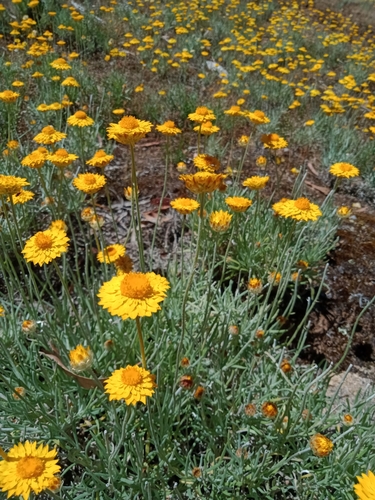
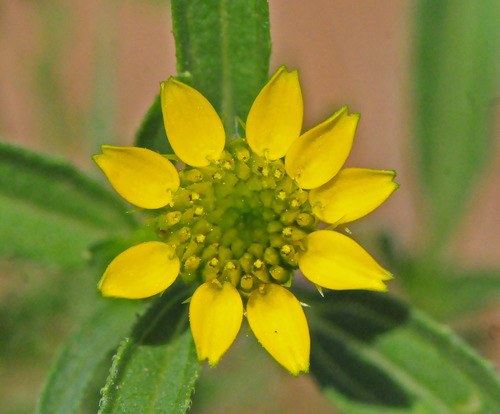
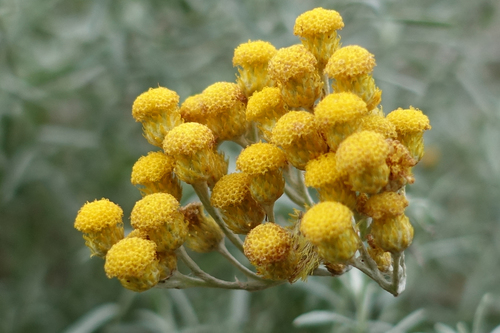
Chrysocephalum semipapposum, also called clustered everlasting, is a highly variable perennial herbaceous shrub. It is typically an erect, sprawling shrub 15 to 60 cm high and up to 40 cm wide, though some forms have been recorded reaching up to 1 metre tall, and it is sometimes mistaken for a weed. It is a native shrub of Australia, with varieties recorded in most Australian states including New South Wales, South Australia, Queensland and Tasmania, and is most notably found in Victoria. It grows in a range of habitats including woodland hills, grassland hills, mountains, and isolated rocky rises. It rarely occurs in large groups, and is most commonly found as scattered individual shrubs. It can grow in a variety of soils, is a tough plant, and can withstand drought. Its flowering season runs from September to December, which is mainly spring and summer. Natural disturbances such as fire promote its growth and flowering. Nectar from its flowers serves as a food source for butterflies, and the plant is only eaten by grazing animals as a last resort when other food sources are limited. Lower light levels can impact its growth, causing it to become leggy, and non-native plant invasion can also affect its growth. Compared to non-rhizosphere soil (soil not directly surrounding plant roots), C. semipapposum inhibits nitrification in its rhizosphere, the soil surrounding the plant's roots. Nitrification converts ammonium, a compound that stays bound to soil, into nitrate, which is more mobile and can be lost to the surrounding environment. Nitrification can have negative environmental impacts: high nitrogen levels in the environment can cause toxic algal blooms, biodiversity loss, and contribute to greenhouse gas emissions. Nitrification can also cause plants to lose up to 50% of their available nitrogen, an element critical for making plant proteins and stimulating plant growth. The rhizosphere greatly affects a plant's ability to take up nutrients, which is essential for the plant's health and growth. C. semipapposum's ability to inhibit nitrification is linked to the lower amount of ammonia oxidising bacteria (AOB) found in its rhizosphere. Further research is needed to understand the exact mechanisms in C. semipapposum that contribute to nitrification inhibition. Due to its toughness, clustered everlasting is used as a ground cover in residential gardens, and can also help suppress weeds. It is low-maintenance thanks to its drought tolerance and frost resistance. It grows well in part shade to full sun, in dry or well-drained soil, and can tolerate heavy clay, loam, or sand-based soils. If the plant dries out, regular pruning down to the base of the stem can promote new growth the following season. Seed viability for C. semipapposum is at least 80%, and the plant is easy to propagate. Propagation can be done by taking cuttings from an existing plant and placing them in a mist bed. Germination can occur in full light, part shade, and dark conditions, though lower light may produce thin, underdeveloped seedlings and leggy growth. Germination may also be affected by insect activity, and takes between 2 to 4 weeks. Clustered everlasting is used as a cut flower for floral arrangements, with a vase life of 7 to 14 days that makes it ideal as a flower filler, and its bright yellow flowers are well-suited for commercial flower markets. It can also be used in dried floral arrangements.