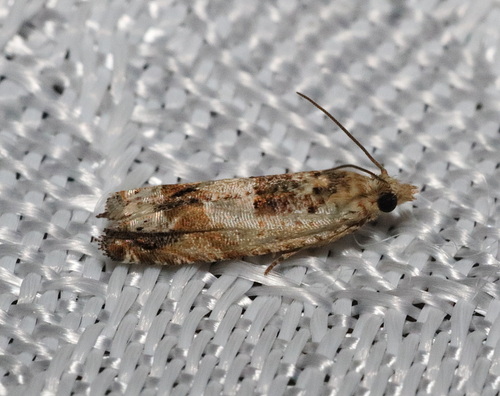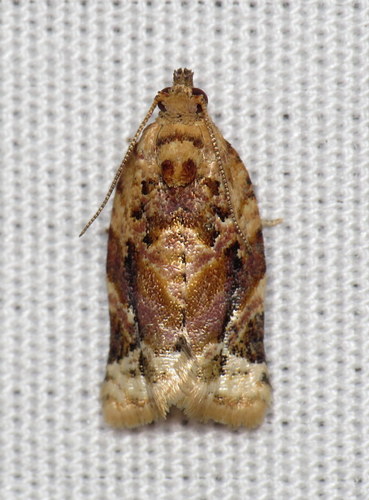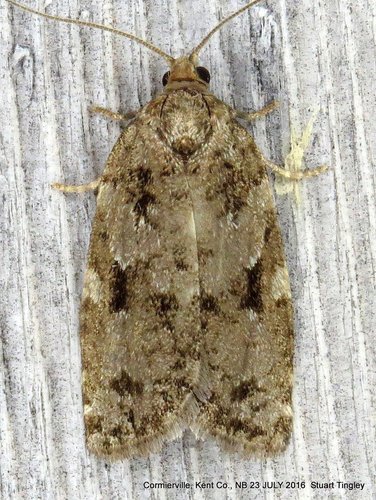
About Choristoneura fumiferana (Clemens, 1865)
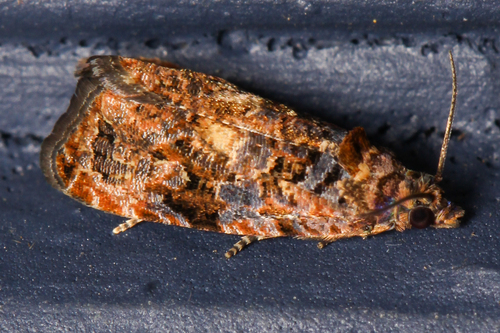
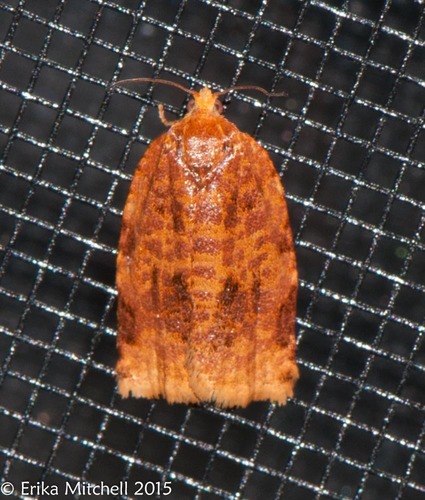
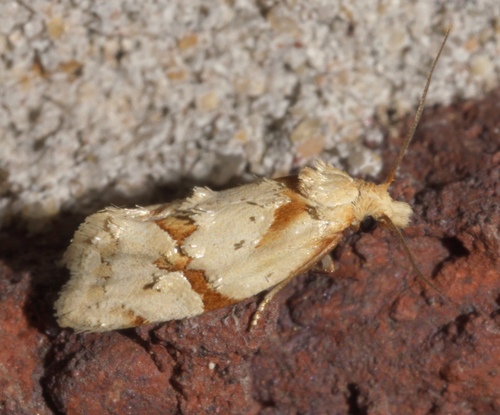
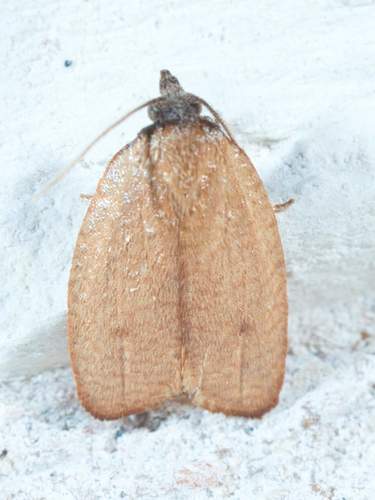
Choristoneura fumiferana, commonly known as the eastern spruce budworm, is a moth species belonging to the family Tortricidae that is native to the eastern United States and Canada. Its caterpillars feed on the needles of spruce and fir trees. Populations of the eastern spruce budworm can go through large population oscillations, and major outbreaks sometimes cause widespread tree death. The first recorded outbreaks of this budworm in the United States took place around 1807, and since 1909, repeated waves of outbreaks have occurred across eastern Canada and the United States. In Canada, major outbreaks happened around 1910–1920, 1940–1950, and 1970–1980; each outbreak affected millions of hectares of forest. Long-term tree-ring research indicates that spruce budworm outbreaks have recurred roughly every three decades since the 16th century, and paleoecological studies show that outbreaks of this species have occurred in eastern North America for thousands of years. Budworm outbreaks cause substantial economic harm to the forestry industry. Because of this, the eastern spruce budworm is regarded as one of the most destructive forest pests in North America, and a variety of control methods are used to manage it. Despite this, the species is also ecologically important: several bird species specialize in feeding on budworms during their breeding season. Multiple theories exist to explain the cyclical pattern of these budworm outbreaks. The range of the eastern spruce budworm is the largest of all known budworm species, and it overlaps completely with the range of its host trees: fir and spruce in eastern North America, primarily in Canada. Its range covers the Boreal Forest, as well as the Great Lakes-St. Lawrence, Northern, and Acadian forest regions, and extends westward as far as Alaska. The eastern spruce budworm is most commonly found in boreal and sub-boreal forest regions, specifically those made up of spruce–fir forest stands. Food shortages can develop in budworm populations when budworms kill a large number of trees in a stand, which often happens during major outbreaks. When food is depleted, larvae feed on older foliage, which leads to slower development and lower egg production in female moths. In general, however, food shortages do not cause larval mortality.