About Chondrohierax uncinatus (Temminck, 1822)
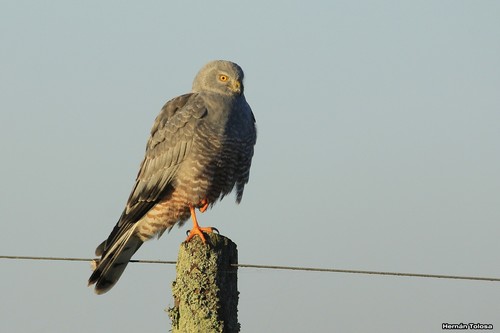
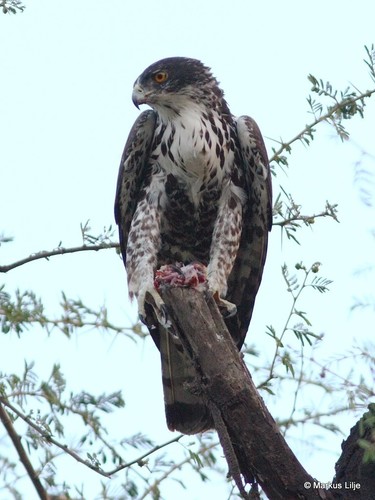
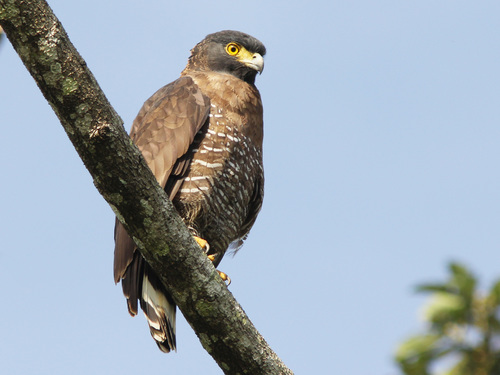
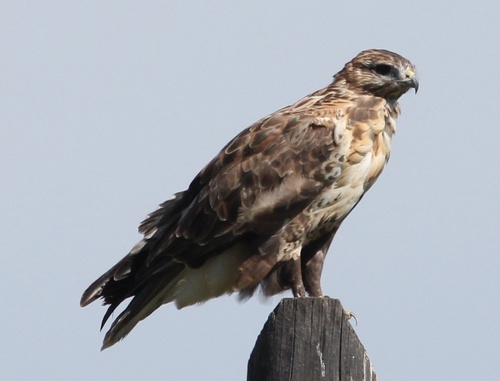
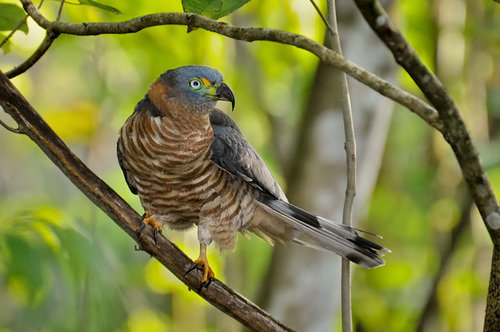
This is a mid-sized, slender raptor that always has a striped belly and banded tail. It likely has more individual variation in color and bill size than any other species of diurnal raptor. When viewed from below, individuals can look blackish or gray (especially males) and brown or brick-red (females), which can make species identification extremely difficult at times. The downcurved hook at the tip of the beak is clearly visible on perched and low-flying birds. Adult body weight ranges from 215 to 397 g (7.6 to 14.0 oz), and body length measures 38–51 cm (15–20 in).
Tree snails (including genera Bulimulus, Homolanyx, and Polymita) are a critical part of this raptor's diet. Local population density of the species is proportional to the presence of tree snails in a region. Across different parts of the species' range, beak size and shape have adapted to match the local species of tree snails available as prey. The hook-billed kite also preys on terrestrial snails such as Strophocheilus, aquatic snails such as Pomacea, frogs, salamanders, lizards, small mammals, crabs, spiders, caterpillars, and other insects. There are unconfirmed reports that it hunts other birds, but this appears unlikely. When handling a caught tree snail, the kite holds the snail with its talon and uses its beak to pry open the shell.