About Chondrilla juncea L.
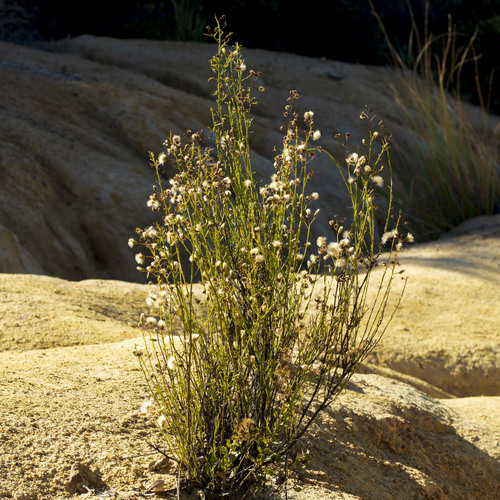
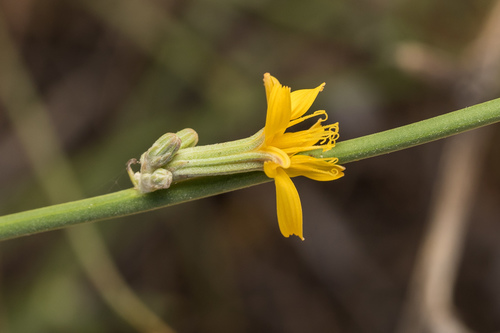
Chondrilla juncea L. is a thin, spindly plant that grows up to 1 meter in height. It begins growth with a basal rosette of leaves, then branches extensively, often forming a weedy thicket. It produces small, dandelion-like flowers that bear rectangular yellow ray florets. Its fruit is an achene around 1 centimeter long, topped with a white pappus. This species reproduces by seed, and also clones itself via its roots. Tilling soil and chopping up the plants actually aids dispersal of this species by cutting apart and spreading its root segments. On the Greek island of Crete, locals eat the leaves and tender shoots of a local variety called ampelosyrida or glykosyrida raw or boiled in salads. This plant is also traditionally consumed by ethnic Albanians (Arbëreshë) in the Vulture area of southern Italy. Chondrilla juncea may have antioxidant activity and some potential for medicinal use. Extracts from the aerial parts of the plant show XO-inhibiting activity, which has potential benefits for hyperuricaemia and gout. In the eastern region of Turkey, chewing gum is produced from the plant's body.