About Chlorospingus flavopectus (Lafresnaye, 1840)
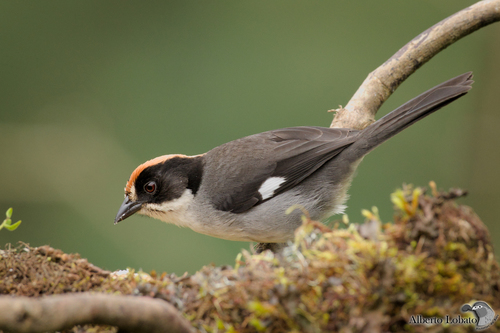
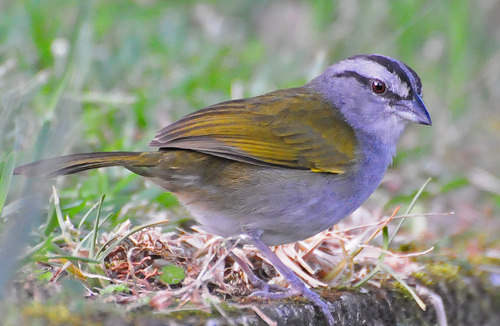
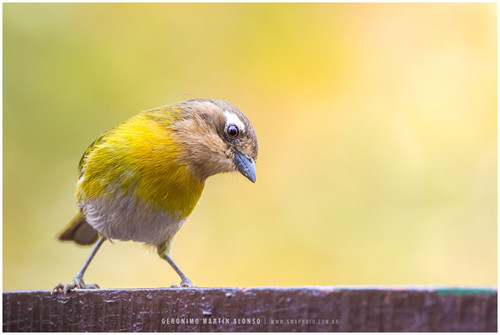
Description and ecology: Adult Common Chlorospingus (Chlorospingus flavopectus) are 13.5 cm (5.3 in) long on average and weigh an average of 20 g (0.71 oz). Adults have a brown head, usually with a thin supercilium, a white spot behind the eye, and a light throat. Their upperparts are olive, and their underparts are yellow, turning white on the belly. Plumage coloration, especially of the cheeks, throat, and eye region, varies widely across this species' large range. This variation supports the theory that these birds form a superspecies. Immatures are browner on the upperparts and darker on the underparts than adults, and they have a duller olive eye spot. Hatchlings are covered in dark gray down feathers and have bright yellow bills. This bird's call is a squeaky tseeet or chit, while songs vary widely between different populations. The closely related sooty-capped chlorospingus (C. pileatus) has a blacker head with a bold white supercilium instead of an eye spot. In Middle America, this species is typically found at elevations from 400 to 2,300 m (1,300 to 7,500 ft) above sea level. Near the Equator, it is commonly found between 2,000 and 3,500 m (6,600–11,500 ft) ASL. Its preferred habitat is cloud forests with abundant undergrowth, plus adjacent bushy clearings. This habitat is dominated by trees and shrubs from the plant families Asteraceae, Clusiaceae, Cyatheaceae, Melastomataceae, Rubiaceae, and Winteraceae, as well as epiphytes from Araceae (for example Anthurium) and Orchidaceae. Common chlorospingus are most often found in small groups or as members of mixed-species feeding flocks, and they are rather sedentary. This passerine bird feeds on insects, spiders, small fruits, and nectar. The menoponid chewing louse Myrsidea ophthalmici was first described from a Venezuelan specimen of this bird, and to date it has not been recorded from any other host. If the current C. flavopectus taxon is split into multiple species, the Venezuelan population of this bird would be classified as a separate distinct species. There appears to be no dedicated nesting season at least in the hottest parts of the species' range, but overall the common chlorospingus mainly prefers to breed between October and May. These birds hide their nests below vegetation; nests are placed on banks or slopes, in hollows or tree trunks, among epiphytes, or up in trees. The nest is a bulky cup constructed from thin twigs, roots, coarse leaves, and mosses. It measures around 10–15 cm (3.9–5.9 in) high and nearly 10 cm (3.9 in) wide. The inner cup of the nest is lined with fine leaves and fibers, and is almost 5 cm (2.0 in) wide and deep. Nests may be placed over 20 m (66 ft) high in a tree, but are usually located 15 m (49 ft) high or lower. In most populations, nests are occasionally built less than 1 m (3.3 ft) above ground, and sometimes even placed directly on the ground. Across most of the species' range, the normal clutch size is two eggs. The northernmost populations sometimes lay clutches of three eggs, while one-egg clutches may be frequent or even the norm in the southern Andean group of populations. This species regularly produces two broods per breeding season across at least part of its range. The eggs are off-white, marked with larger puce spots and smaller maroon spots, most concentrated on the blunt end. They average about 20 mm (0.79 in) long and weigh an average of 2.4 g (0.085 oz). Eggs from one-egg clutches laid by Andean birds may measure almost 24 mm (0.94 in) in length, normally weigh around 3 g (0.11 oz), and can occasionally weigh more than 3.5 g (0.12 oz). The female incubates the eggs for most of the day. Both parents provide food for the young. As nestlings approach fledging, they are fed on average about once every 15 minutes.