About Chlorophyllum molybdites (G.Mey.) Massee
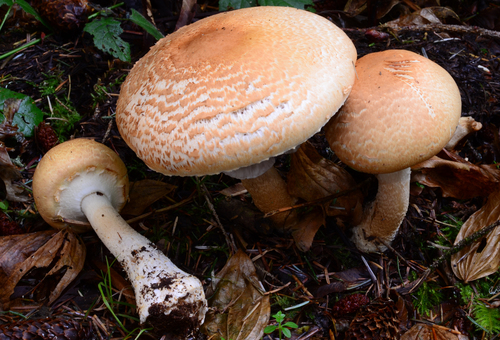
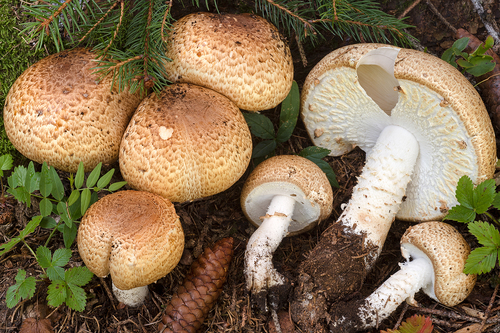
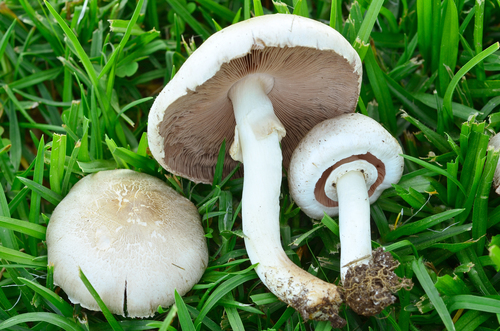
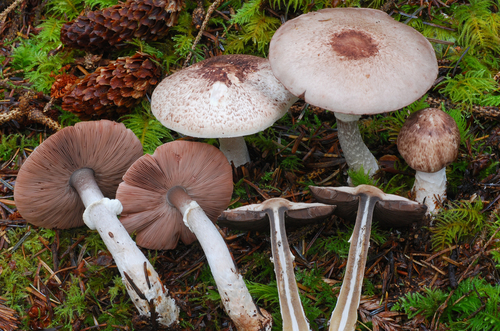
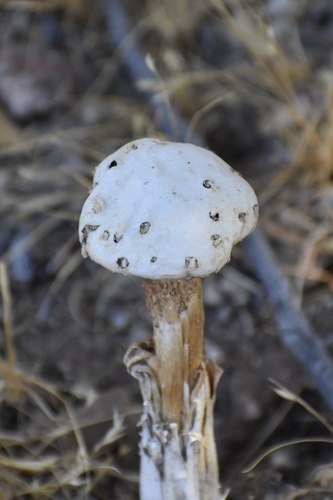
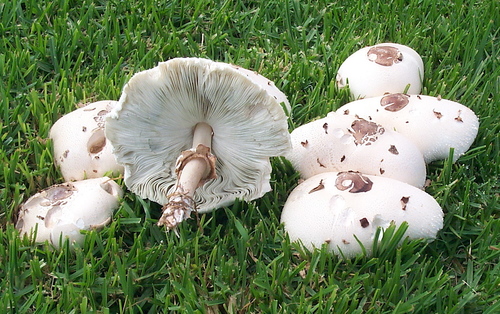
The pileus, or cap, of Chlorophyllum molybdites ranges from 8 to 30 cm (3.1 to 12 inches) in diameter; it is hemispherical with a flattened top. The cap is whitish, covered in coarse brownish scales. Its gills are free and white, usually turning dark green as the mushroom matures. This is the only large mushroom that produces a green spore print. The stipe grows from 5 to 30 cm (2.0 to 12 inches) tall and carries a double-edged ring. The stem lacks the snakeskin pattern that is typically found on the edible parasol mushroom. The mushroom’s flesh is thick, firm when young, and softens with age. The flesh is white, but the base of the stem may occasionally turn reddish-brown, pale reddish-pink, or nearly orange when cut or crushed. Chlorophyllum molybdites grows in meadows, lawns, and parks across eastern North America, as well as in temperate and subtropical regions worldwide. Its fruiting bodies usually emerge after summer and autumn rains. The species appears to have spread to additional countries, with confirmed reports from Scotland, Australia, and Cyprus. It is sometimes called the fairy ring mushroom because it often forms fairy rings. Chlorophyllum molybdites is the most commonly eaten poisonous mushroom in North America. Its toxicity is likely caused by the chemical compound molybdophyllysin, and symptoms are predominantly gastrointestinal: severe vomiting, diarrhea, and abdominal pain develop 1–3 hours after consumption. While poisonings can be severe, especially in children, deaths from this mushroom are extremely rare, and have almost exclusively occurred in small children and dogs. Professor James Kimbrough notes that Chlorophyllum molybdites, also called the green-spored Morgan’s Lepiota, causes more mushroom poisoning cases in North America, and specifically in Florida, than any other species. This high number of poisonings is probably because the species is easily confused with popular edible mushrooms such as Lepiota procera and L. rhacodes, and it is one of the most common mushrooms found on lawns and pastures across most of the country, excluding the Pacific Northwest. When eaten raw, C. molybdites causes severe symptoms, including bloody stools, within a couple of hours. Some people eat and enjoy this mushroom when it is fully cooked, or parboiled with the cooking water discarded before further preparation. In 1974, Eilers and Nelso identified a heat-labile, high molecular weight protein from C. molybdites that caused adverse effects when injected intraperitoneally into laboratory animals. Poisoning cases have also been reported in Malaysia, where the mushroom is often mistaken for the local edible Termitomyces species. It may also be confused with Coprinus comatus, the shaggy mane.