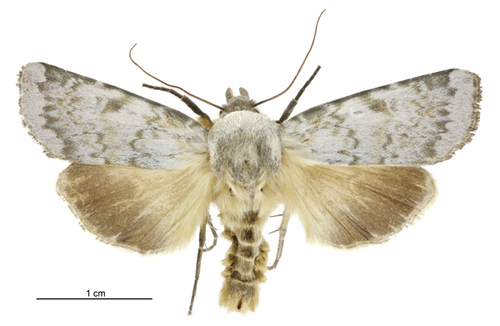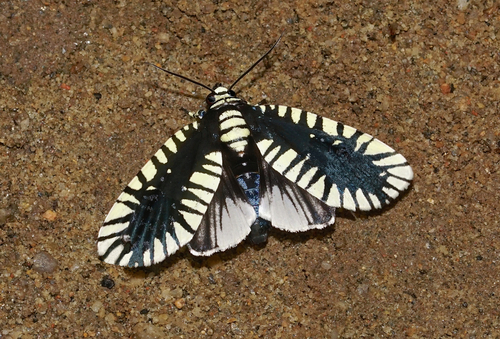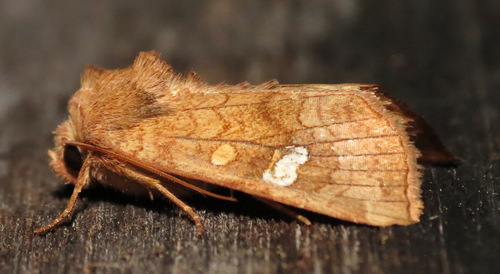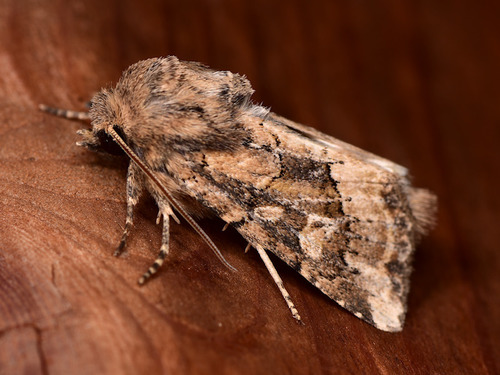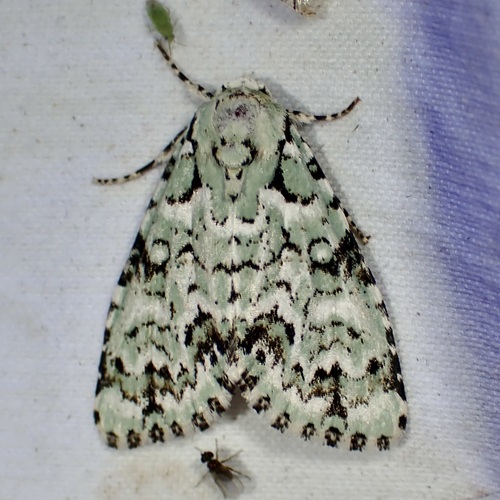
About Chloronycta tybo
Chloronycta is a currently monotypic moth genus in the family Noctuidae, erected by B. Christian Schmidt and Gary G. Anweiler in 2014. Its only described species is Chloronycta tybo, which was first described by William Barnes in 1904. This species is found in mountainous areas ranging from Mexico to southeastern Arizona and southwestern New Mexico, and extends north to the Sierra Madre Occidental. Its habitat includes canyons and mid-elevation wooded areas, especially riparian corridors. Males have a wingspan of about 34 mm, while females have a wingspan of about 36 mm. Adult Chloronycta tybo are on wing in January, and again from July to September. The larvae of this species feed on Fraxinus velutina. The first two larval instars are leaf skeletonizers that remove patches of leaf tissue from the lower surface of leaves. Middle and late instars feed from the edge of a leaf, always feeding from the underside of the leaf blade. Last-instar larvae grow to a length of about 26 mm. They are waxy green with a pale green head. Before pupation, larvae tunnel into punky wood (when available) to create a pupal crypt. This crypt contains almost no silk, with the only exception being the silk used to weave its frass-silk cover. There is also an undescribed Chloronycta species from Mexico.