About Chloroclysta miata (Linnaeus, 1758)
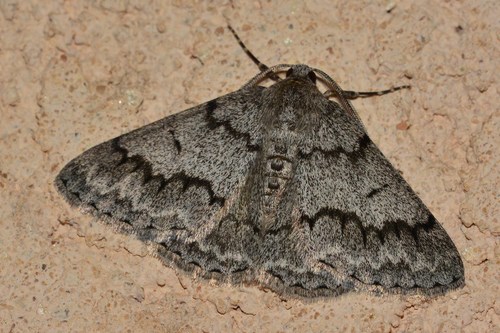
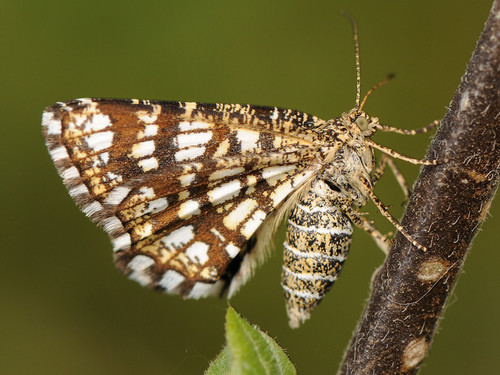
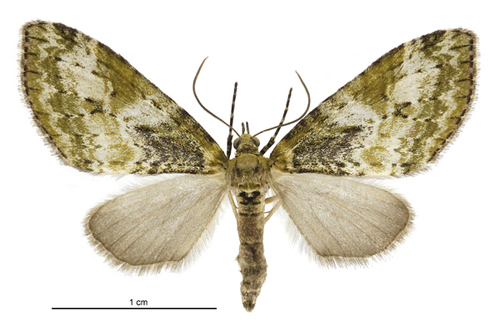
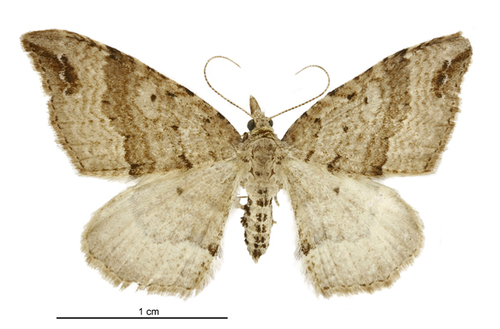
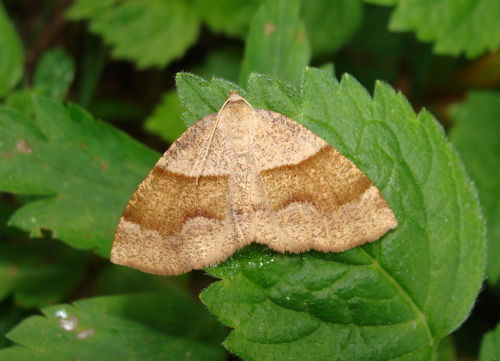
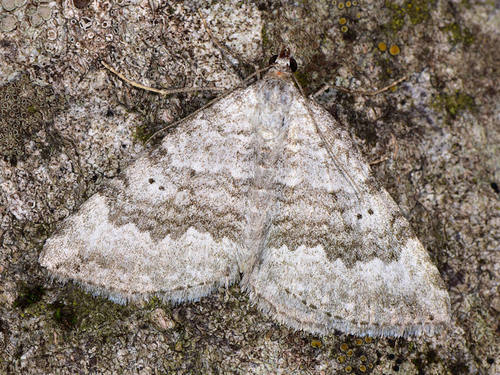
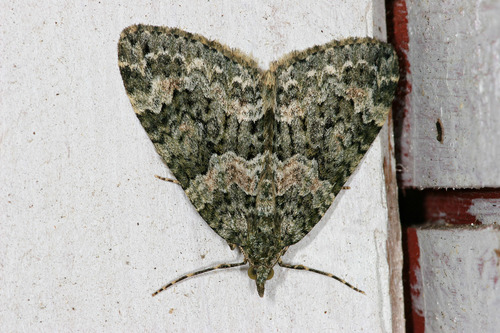
Chloroclysta miata, commonly known as the autumn green carpet, is a moth species belonging to the family Geometridae. This species was first formally described by Carl Linnaeus in the 10th edition of his work Systema Naturae, published in 1758. Its distribution ranges across most of Europe, extending eastward to the Alatau region of Central Asia. The wingspan of adult individuals measures between 34 and 40 mm (1.3 to 1.6 inches). The moth’s overall base coloration is olive green, and adults have broader forewings than related species. Its crosslines and wing bands are typically more evenly and extensively whitish in color. The base ground color of the forewings can be either olive green or grey-green, with a paler central band and a pale area at the base of the wing. Intricate patterning is formed by the crosslines and chevron-shaped bands, and the submarginal line is distinctly white. The hindwings are pale grey, and marked with a dark discal spot. Mature larvae are hairless, long and slender, and have a bright yellow-green body with red-purple stripes running along their lateral sides. This species resembles the closely related red-green carpet, Chloroclysta siterata; however, C. siterata can be distinguished by its reddish overall tinge and darker hindwings. Adult autumn green carpet moths are active on wing from August to November, and become active again from April to May after overwintering in the adult stage. Larvae feed on a wide variety of deciduous trees and shrubs, including Betula verrucosa, Betula pubescens, multiple Salix species (such as Salix caprea and Salix phylicifolia), Populus tremula, Sorbus aucuparia, Amelanchier spicata, Prunus padus, Rhamnus frangula, Vaccinium myrtillus, and Vaccinium uliginosum. Larvae can be found feeding and developing from May through August.