About Chlorochrysa nitidissima P.L.Sclater, 1874
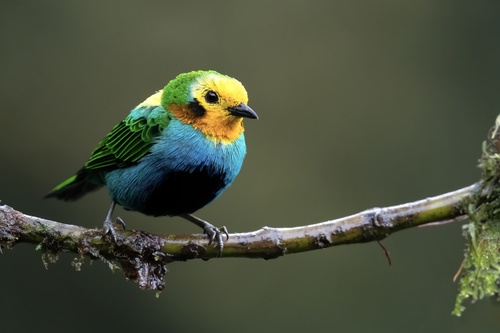
Chlorochrysa nitidissima P.L.Sclater, 1874, commonly called the multicolored tanager, is a small passerine bird that reaches approximately 12 cm (5 in) in total length. Male individuals have yellow coloring on the crown, face, mantle, and throat, paired with chestnut and black ear coverts, bright green nape and wings, blue rump, breast, and belly, and a black patch at the center of their underparts. Females are duller in overall coloration, lack the yellow mantle and the black underpart patch seen in males. Immature birds of both sexes look similar to adult females, but are even duller in color. This species is endemic to the interior of wet montane forests located in the Occidental and Central Cordillera of Colombia. It mainly occurs at elevations between 1300 and 2200 meters above sea level, though some records show it can be found as low as 900 meters, particularly in the Department of Cauca. It has been documented in the Colombian departments of Cauca, Valle del Cauca, Choco, Quindío, Risaralda, Caldas, and Antioquia. It generally prefers mature forests, but has also been recorded in mature secondary forests and along forest edges. Most recent records of this species come from Valle del Cauca Department, where it lives year-round and remains fairly common even in small forest fragments. The multicolored tanager is most often encountered as a member of mixed-species foraging flocks in the forest's upper canopy. It typically searches for insects on the undersides of leaves on outer tree limbs, clinging to leaves with its feet to forage. It has also been reported eating ripe fruit, most often from the plant genera Cordia, Miconia, Palicourea, and Ficus.