About Chlorissa etruscaria (Zeller, 1849)
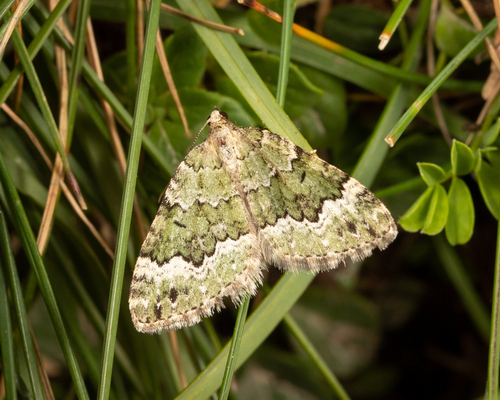
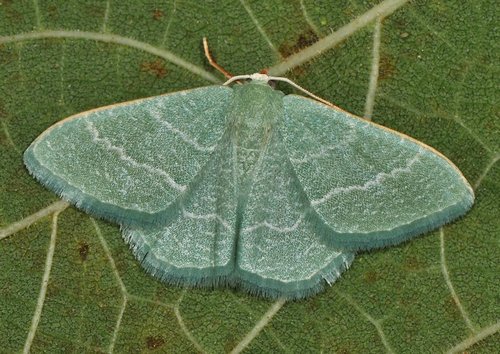
This species, scientifically known as Chlorissa etruscaria (Zeller, 1849), is also referred to as Phaiogramma etruscaria. Males have a wingspan of 17.7 to 19.3 mm, while females have a larger wingspan ranging from 20 to 23.3 mm. The wings are light green, with distinct visible white antemedial lines and small marbled striations. Males only have terminal spurs on their hind tibia, whereas females have two pairs of spurs on the hind tibia. Male antennae are ciliate, and female antennae are filiform. Adult moths are active on the wing from May to June. This species produces one generation per year, and the pupal stage overwinters. The larvae are polyphagous, feeding on a variety of plant genera and species: they feed on multiple plants in the Apiaceae family, including Anethum graveolens, Bupleurum, Foeniculum vulgare, Daucus, Ferula, and Peucedanum, as well as on Thapsus, Lotus, Clematis, and Rosmarinus. This species is distributed from the Mediterranean region of Europe to central Asia, with confirmed records from Russia, Italy, France, the Crimea, Turkmenistan, Kyrgyzstan, and Kazakhstan. It lives in warm scrub habitats and xerophilous hillsides.