About Chloridea virescens (Fabricius, 1777)
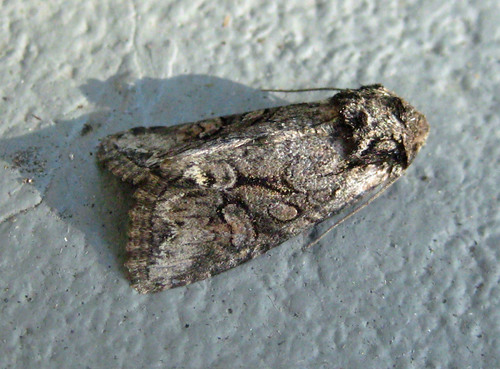
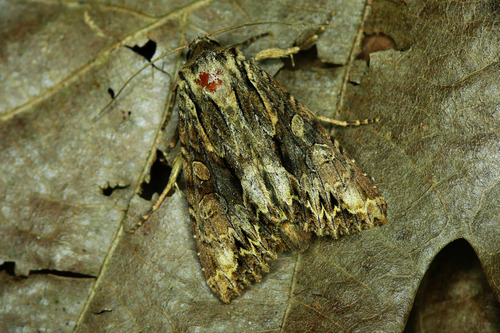
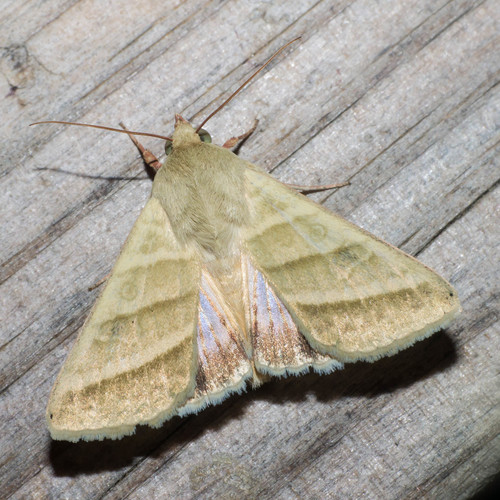
Adult Chloridea virescens, also called tobacco budworm, are brownish with a light green tinge. Their front wings bear three dark bands, each bordered by whitish or cream coloring. Hindwings are whitish with a dark band along the distal margin. Fully grown adults have a wingspan ranging from 28 to 35 mm (1.1 to 1.4 inches). Females are typically darker in color than males.
This species is found across eastern and southwestern United States, and has been collected in Louisiana and Florida. It is also spotted in California, New England, and southern Canada during late summer, as it disperses northward every year. It generally overwinters in southern U.S. states, but can survive northern climates in sheltered locations such as greenhouses. It is also widespread across the Caribbean, and has been recorded in Central and South America. Confirmed populations exist in Virginia, North Carolina, South Carolina, Georgia, Florida, Texas, Colorado, Mexico, Guatemala, Panama, Brazil, and the Antilles.
The tobacco budworm has four distinct life stages: egg, larval, pupal, and adult. Its life cycle takes place from late spring to early fall, the warmer months of the year, with timing varying by region. Depending on location, Chloridea virescens can produce 4 to 5 generations per year during this active period. Warmer temperatures speed up maturation for the larval, pupal, and adult stages, but also speed up senescence, while colder temperatures result in slower maturation. In the southern United States, adult moths emerge between March and May.