About Chiranthodendron pentadactylon Larreat.
Chiranthodendron pentadactylon Larreat. is a tree species native to Guatemala and southern Mexico. Growing on the wet slopes of these regions, mature trees can reach a height between 10.5 and 27.5 m (34 to 90 ft). This species is cultivated in gardens around the world due to its distinctive flower appearance that resembles a hand, and it grows particularly well in North America near its native range.
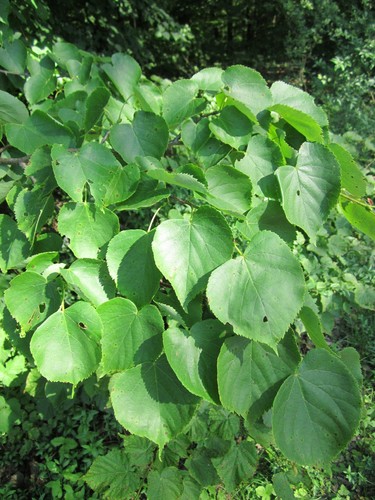
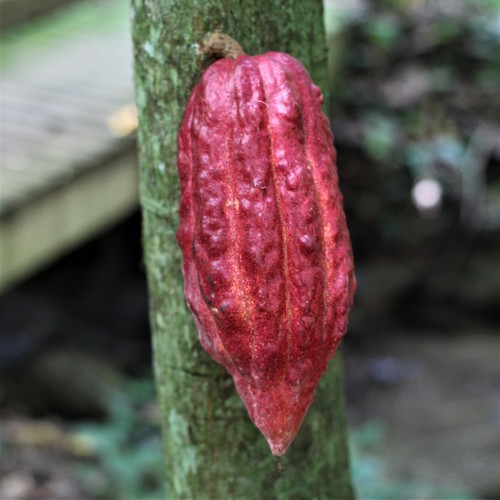
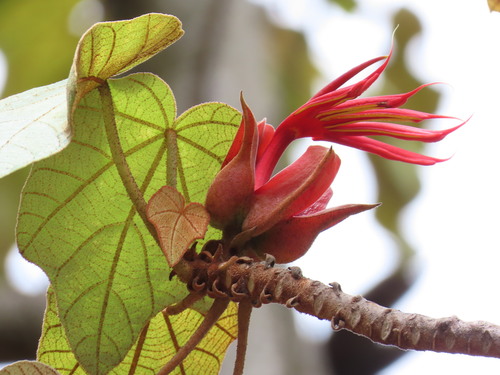
Its leaves are large with shallow lobes, and have a brown covering of hairs on their underside. The species' distinctive flowers emerge in late spring and early summer. They have five long, bright red stamens that curve upward, creating a clear resemblance to a clawed hand. Its fruit is an oblong, five-lobed capsule 7.5–10 cm (3.0–3.9 in) long, which holds black seeds inside. This species was originally described from a single cultivated specimen grown in Toluca, located in the Toluca Valley far outside its native range. The tree was revered by the Mayans.
Traditional medical uses of this tree are documented for the Mayans and other Central American communities. Solutions prepared from the tree's flowers are used as a remedy for lower abdominal pain and heart conditions. These solutions also reduce edema and serum cholesterol levels, and act as diuretics due to the presence of the glycosides quercetin and luteolin. In Central America and parts of southern Mexico, the flowers are extracted in hot water and consumed as a tea for these medical purposes. The preparation can also be used externally as a wash.