About Chionochloa rubra Zotov
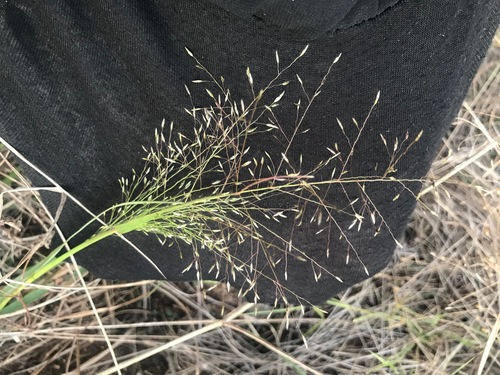
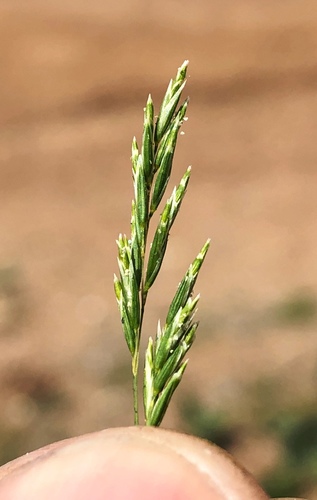
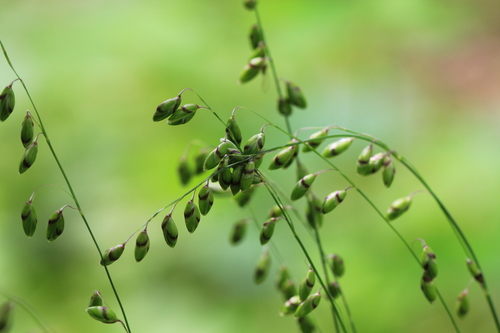
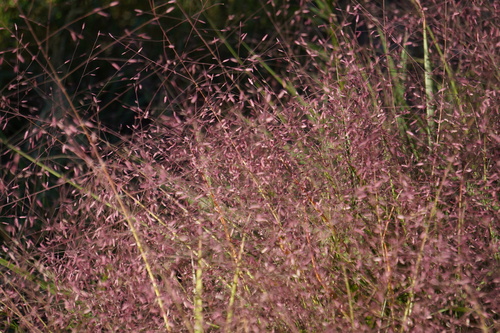
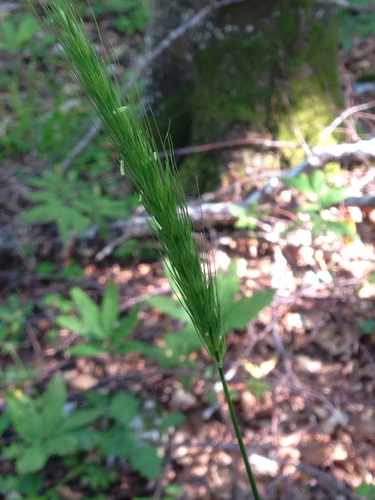
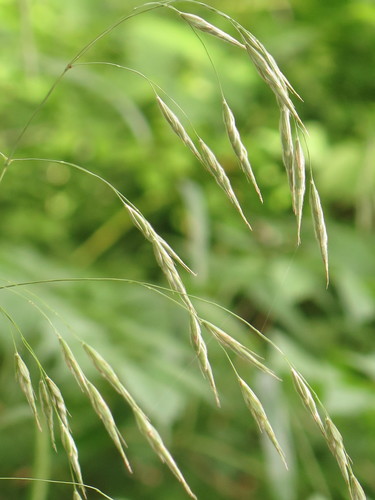
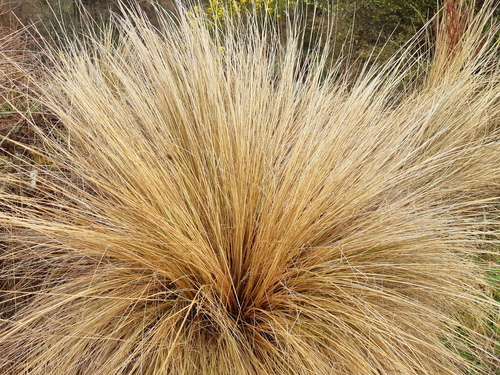
New Zealand is home to 22 endemic Chionochloa species, including Chionochloa rubra, which has a distinctive appearance compared to other members of its genus. This species has a long lifespan, so there is rarely dead foliage surrounding the plant, giving it a clean, sleek, vertical look. When growing in rich, moist ground, C. rubra reaches 1–1.2 meters in height, with its seed heads growing even taller. Its leaf blades grow up to 1 meter long and 1.2 millimeters in diameter, and the full plant grows to 50 centimeters in diameter, with very little rhizomatous spread. Long hairs typically grow next to the base of the leaf, and prickle-teeth are present toward the leaf apex; these features help distinguish C. rubra from other Chionochloa species. Rows of short hairs also grow at the base of the leaf. In dry habitats such as dry clay soil, the plant grows poorly and may only reach 90 centimeters in height, which can cause it to be confused with other Chionochloa species. Depending on the subspecies, the color of its tawny leaves ranges from a green tone to its more dominant bronze or red. Overall, C. rubra is a tall brownish-red plant with slender leaves that clump together to form its characteristic arc shape. C. rubra displays the unusual phenomenon of producing many seeds in response to decreased seed predation, and has lower seed production in areas with higher predation rates. Red tussock (the common name for C. rubra) seeds annually at low alpine areas, which differs from other Chionochloa species, and mast seeds at higher altitudes. This difference is explained by the fact that red tussock does not have pronounced altitudinal ecotypes, and that seed predator satiation and mast seeding are ineffective at lower altitudes. C. rubra is endemic to New Zealand. Its range extends from the central volcanic fields and Huiarau Range to Stewart Island, and from the lower penalpine belt down to sea level in the southern part of New Zealand. There are two types of tussock-grassland: "Low tussock-grassland", which is dominated by small tussock grasses, and "Tall tussock-grassland", which is dominated by generally larger tussocks. Red tussock is predominantly found in Tall tussock-grassland, and covers most of the pumice-scoria soil on the volcanic plateau between 900 and 1200 meters in altitude. Red tussock is highly adaptable and can grow in exposed, windy environments. It tolerates low-nutrient soils, and can grow in relatively wet or dry soil conditions. This species is useful for aiding the reestablishment of natural habitats, particularly as a buffer plant around wetland areas. C. rubra is slow growing, and prefers cooler, wet, less humid climates. Once established, it is very hardy and resistant to damage due to its tough texture. The seeds of C. rubra are dispersed by gravity and wind, and the plant relies very little on invertebrates or mammals as pollinating agents. Mass seeding (also called mast seeding) is its main strategy to prevent seed loss from predators with large appetites and from competing plants. Mass seeding is the production of a large quantity of seeds that are released all at once across a large area, and the plant usually takes a few years to produce enough seed to complete this process. This reproductive strategy is particularly prominent in New Zealand's Southland Takahe Valley. Studies conducted over four years in Takahe Valley recorded a mean annual seed loss of 10–33%; without mass seeding, the species would not be as successful as it is. Seeds are dropped on well-drained, moist soil where they germinate and grow. C. rubra flowers in summer, from October to December, and produces fruit from November through May. Chionochloa rubra is grown in cultivation, and in the United Kingdom it has received the Royal Horticultural Society's Award of Garden Merit. In ancient southern Māori societies, people used this tussock to make leggings that protected bare legs from speargrass. It was also used inside paraerae (Māori sandals) for warmth, as it made feet much warmer than sandals without the tussock.