About Chionanthus pygmaeus Small
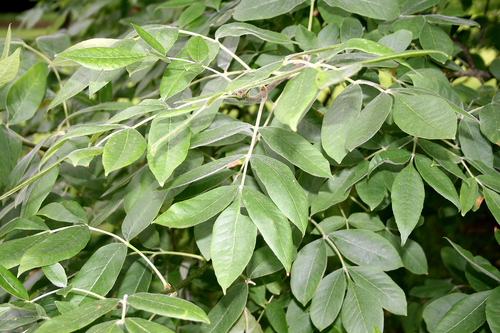
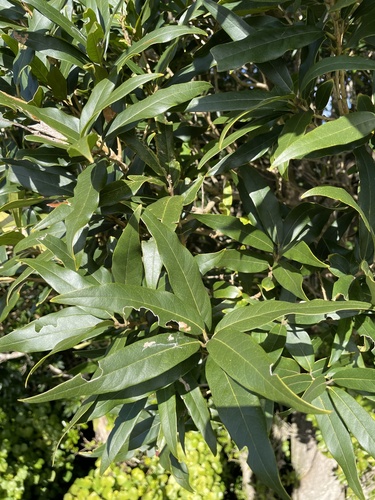
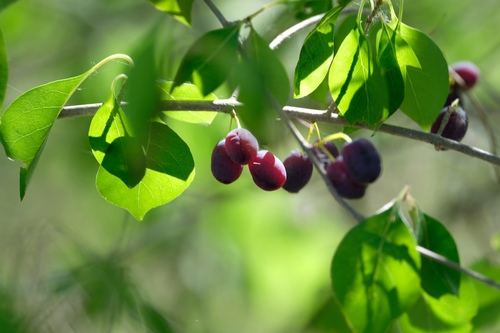
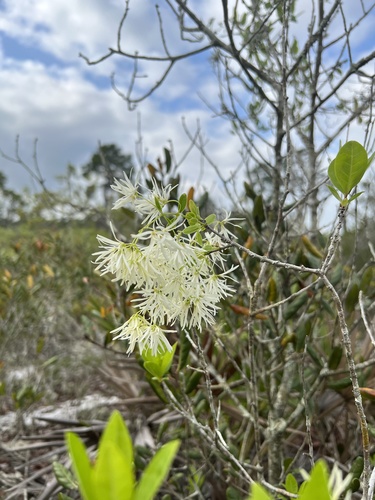
Chionanthus pygmaeus Small is a plant with variable growth habit. It is usually a shrub that stays under 1 meter tall, but it can sometimes grow into a tree that reaches 4 to 5 meters in height. When the plant is completely buried in a sand dune, its branches can grow directly out from the sand. Its leaves are dark yellowish-green, leathery, irregularly shaped, and can grow up to 10 centimeters long; the leaf petioles may be maroon. The inflorescence is a panicle holding 3 to 6 flowers, which grows from leaf axils. The fragrant flowers have a bell-shaped corolla with four elongated, narrow lobes, and can measure up to 1.5 centimeters long. The drooping panicle, with its many narrow corolla lobes, can look fringelike, which gives the plant its common name. The fruit is a drupe up to 2.5 centimeters long that ripens to purple or brownish. This plant reproduces both sexually via seeds and vegetatively by growing new shoots. It can resprout after its aboveground parts are burned away in a fire, and it is a dioecious species. It is thought to be quite long-lived. This plant grows in Florida scrub, sandhills, hammocks, flatwoods, and the transition zones between these habitats. Many of these ecosystems are currently endangered and degraded, with the remaining fragmented habitat under pressure from destructive processes. It grows in the well-drained yellow and white sands left by ancient dunes that once covered this part of Central Florida. Many populations of this plant have already been extirpated, because they grew on valuable private land that was destroyed during development. Most of the 46 known current occurrences are located on protected property, such as the Lake Wales Ridge National Wildlife Refuge, but not all of this protected land is managed correctly. Most habitats where this plant grows, including scrub and sandhills, depend on periodic natural fires to stay healthy and maintained. Today, fires are generally put out quickly, which disrupts the natural fire regime. Even on protected conserved sites, many areas are now overgrown because they have not burned for many years. This species, along with many other plants from these ecosystems, cannot grow when shaded by tall woody vegetation. This plant can be a dominant species in some very localized areas, and may be codominant with other shrubs and trees to form thickets. It has been recorded growing alongside yellow plum (Ximenia americana), silk bay (Persea humilis), scrub hickory (Carya floridana), sand pine (Pinus clausa), sandhill rosemary (Ceratiola ericoides), multiple oak species, and its relative the white fringetree (Chionanthus virginicus). It sometimes hybridizes with white fringetree. More research is needed on this species, because many aspects of its life history, reproduction, pollination, population biology, fire ecology, genetics, and other biological traits remain unknown.