About Chilocorus stigma (Say, 1835)
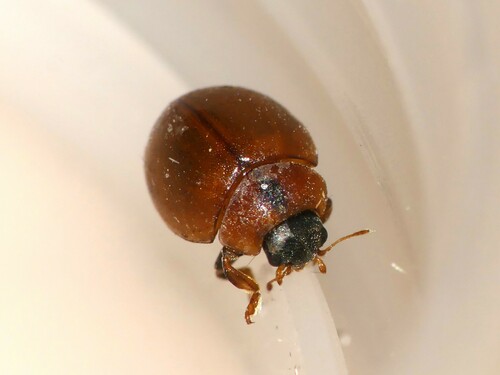
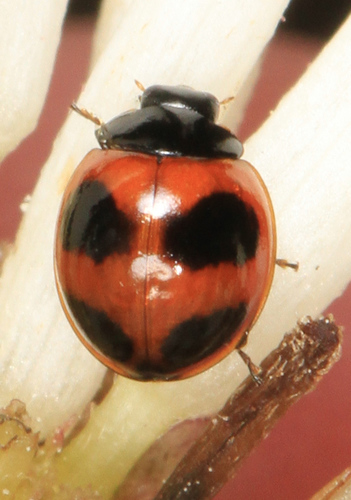
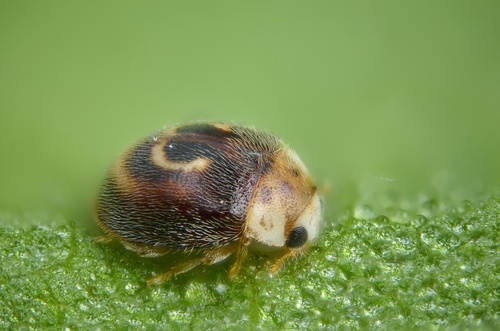
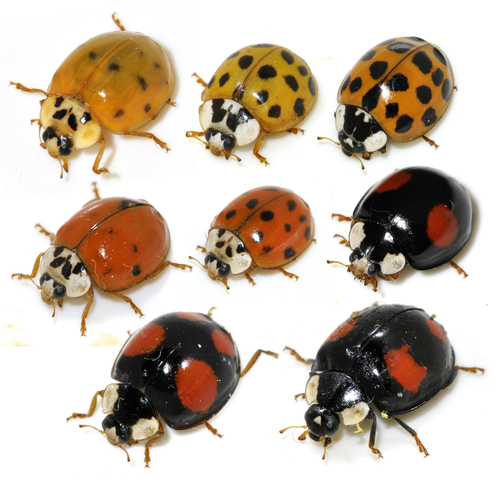
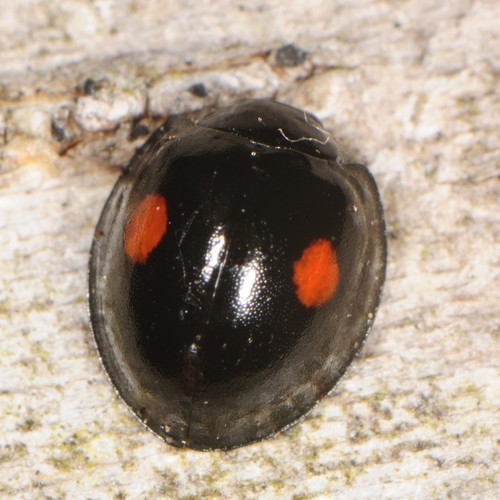
Chilocorus stigma, most commonly called the twice-stabbed ladybug, is native to the United States and Canada, and has also been introduced to Hawaii. This species is shiny black, with one red spot on each elytron. The rest of its body is black, though its abdomen is either yellow or red. It is often confused with Chilocorus orbus, another species known as the two-stabbed lady beetle that is widespread in California. C. stigma primarily lives in terrestrial and arboreal habitats. It feeds mainly on aphids, multiple species of scale insects including pine needle scale, beech bark scale and Florida red scale, and mealybugs. As a beneficial insect, it provides pest control in both natural woodlands and commercial forested growing spaces like orchards and citrus groves, including control for non-native pest species. The introduced elongate hemlock scale (Fiorinia externa Ferris), which causes significant damage to hemlock trees across North America, can be moderately controlled by populations of C. stigma. Currently, C. stigma is not available for commercial sale for pest management use on orchards or farms. In Canada and the northern United States, C. stigma typically completes two life cycles per year. In more southern regions, it may complete several life cycles annually. It overwinters in ground litter during cold months. Like other ladybeetle species, C. stigma is susceptible to insecticides, which have reduced its wild populations. To preserve the pest control benefits this insect provides, people using pest management are encouraged to use natural alternatives to conventional insecticides to slow the decline of C. stigma populations.