About Chesias rufata (Fabricius, 1775)
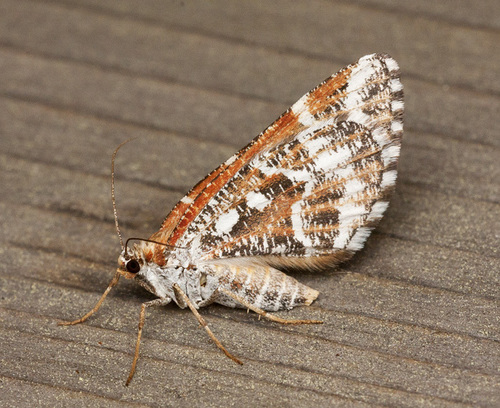
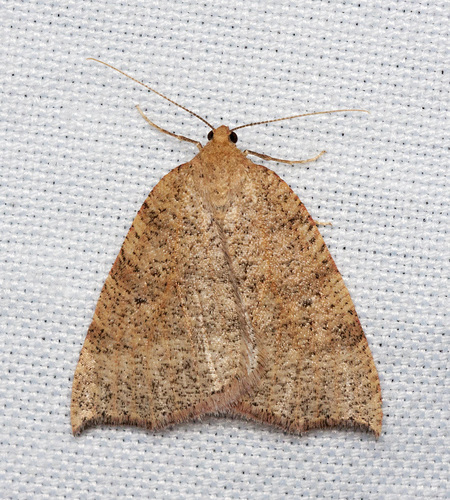
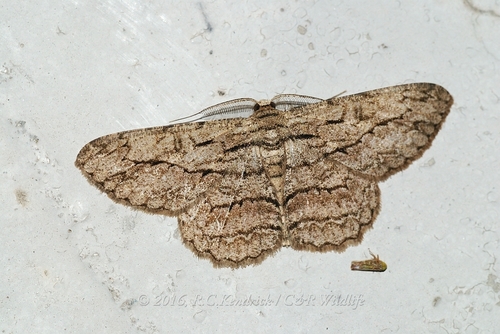
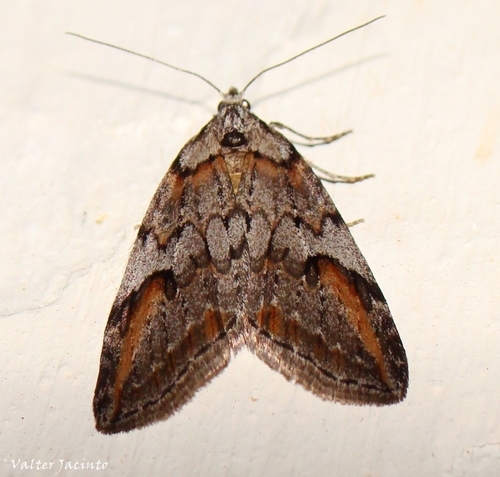
Chesias rufata, commonly known as the broom-tip, is a moth species in the Geometridae family. It was first described by Johan Christian Fabricius in 1775. This species has a widespread distribution across central and western Europe, including Great Britain and Ireland, and can also be found from Morocco to Asia Minor. It prefers habitats such as heaths, bushy slopes, and rocky valleys that suit its food plants, and can be found at elevations up to 1,500 metres in the Alps. The wingspan of adult Chesias rufata ranges from 26 to 32 millimetres (1.0 to 1.3 inches), and the species typically has approximately oval-shaped wings. The basal area of the forewing is silver, marked with a very distinct reddish-brown cross band. Some specimens have a grey basal area and very broad reddish-brown areas on either side of the wing's midfield. Others have a black mark on the upper part of the forewing's second cross line, followed by a reddish or ochreous flush that extends to the wing tips. A dark dividing line is located at the wing apex, and a wavy whitish line sits near the wing margin. Hindwings are unpatterned and coloured ochre grey. Prout has described the most common varieties of the species. The egg of Chesias rufata is rather small and oval, with slight broadening and deepening at the micropylar end. Its surface is faintly pitted, and its colour is a soft orange close to salmon-colour. The larva is very similar to the larva of Chesias legatella, but differs in having a subdorsal line edged with darker green and black spiracles. Larvae feed on Cytisus scoparius, Genista tinctoria, and Genista germanica. They feed at night, and are fairly easy to spot at this time because they habitually stretch out at full length away from their host plant. Larvae can be found between June and September. Adult moths are on wing from April to May, and normally produce one generation per year. In some seasons and some localities, a second generation may occur with adults on wing from June to August, and the species has very erratic emergence timing. Adult Chesias rufata have been recorded feeding on nectar from the flowers of Salix and Berberis species.