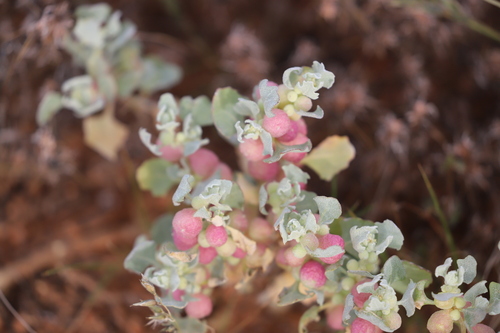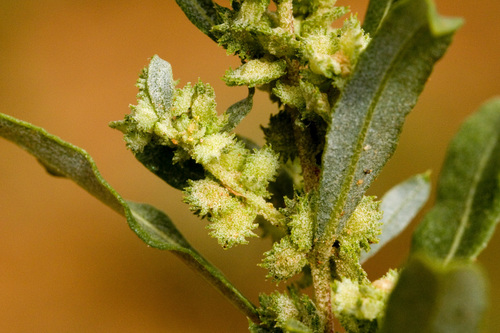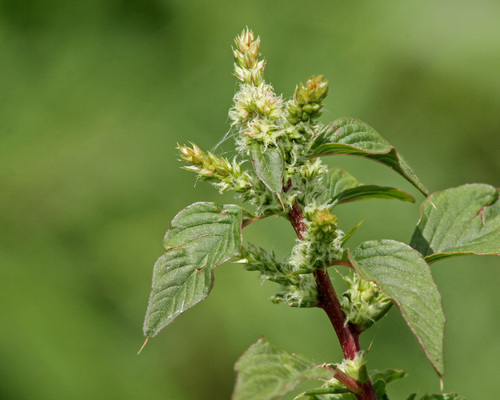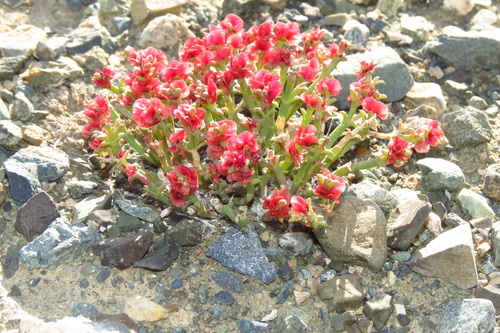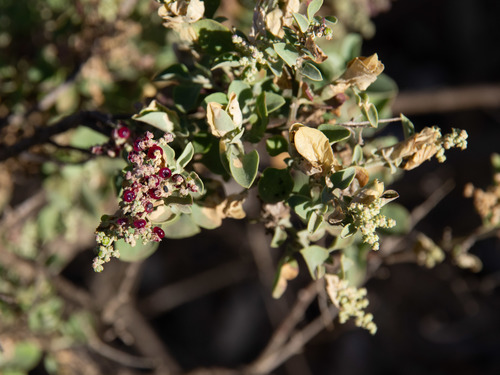
Chenopodium parabolicum (R.Br.) S.Fuentes & Borsch is a plant in the Amaranthaceae family, order Caryophyllales, kingdom Plantae. Not known to be toxic.

Photo of Chenopodium parabolicum (R.Br.) S.Fuentes & Borsch (Chenopodium parabolicum (R.Br.) S.Fuentes & Borsch)
🌿 Plantae

Chenopodium parabolicum (R.Br.) S.Fuentes & Borsch

Chenopodium parabolicum (R.Br.) S.Fuentes & Borsch

Chenopodium parabolicum, fragrant or mealy saltbush, is an Australian Amaranthaceae shrub reclassified from Rhagodia in 2012.

Family
Genus
Chenopodium
Order
Caryophyllales
Class
Magnoliopsida
⚠️ Toxicity Note

Insufficient toxicity evidence; avoid direct contact and ingestion.

About Chenopodium parabolicum (R.Br.) S.Fuentes & Borsch

Chenopodium parabolicum, which has the synonym Rhagodia parabolica, is commonly called fragrant saltbush or mealy saltbush. It is a shrub belonging to the Amaranthaceae family, and it is native to Australia. This species was first formally described in 1810 by botanist Robert Brown in the publication Prodromus Florae Novae Hollandiae. In 2012, following phylogenetic research, it was reclassified as a member of the genus Chenopodium, and given the current scientific name Chenopodium parabolicum (R.Br.) S.Fuentes & Borsch. This species is found in South Australia, Victoria, New South Wales and Queensland.
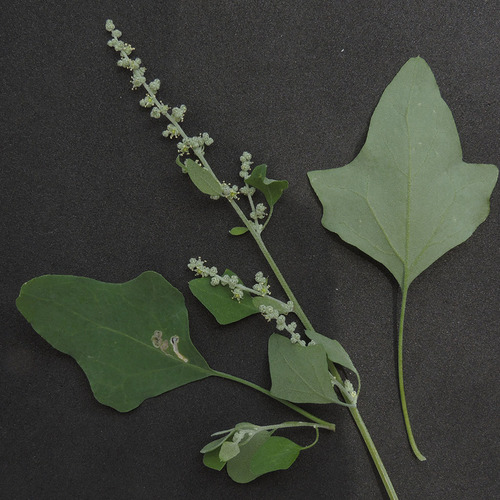
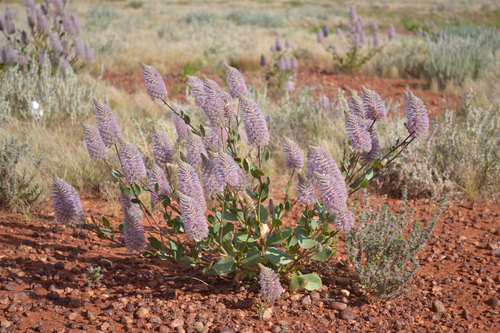
Photo: (c) Terra Occ, some rights reserved (CC BY), uploaded by Terra Occ · cc-by

Taxonomy

Plantae Tracheophyta Magnoliopsida Caryophyllales Amaranthaceae Chenopodium

More from Amaranthaceae

Sources: GBIF, iNaturalist, Wikipedia, NCBI Taxonomy · Disclaimer

Identify Chenopodium parabolicum (R.Br.) S.Fuentes & Borsch instantly — even offline

iNature uses on-device AI to identify plants, animals, fungi and more. No internet needed.

Download iNature — Free

Start Exploring Nature Today

Download iNature for free. 10 identifications on us. No account needed. No credit card required.

Download Free on App Store