About Chenopodium nutans (R.Br.) S.Fuentes & Borsch
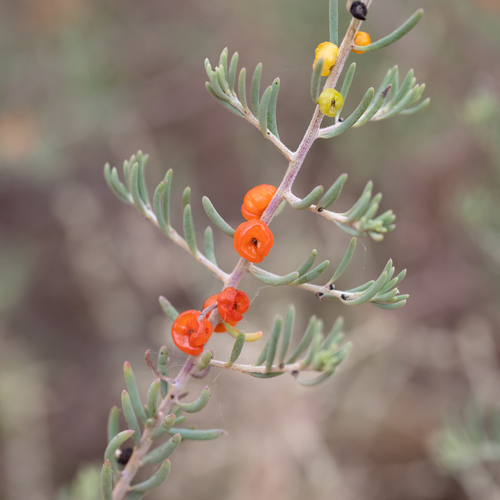
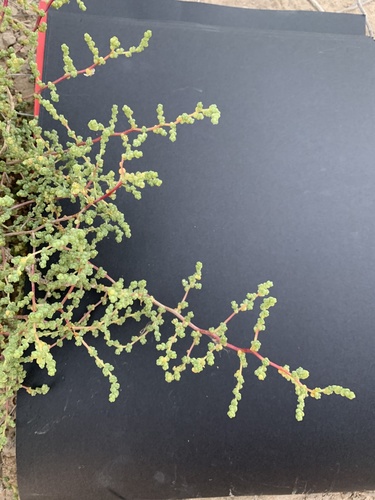
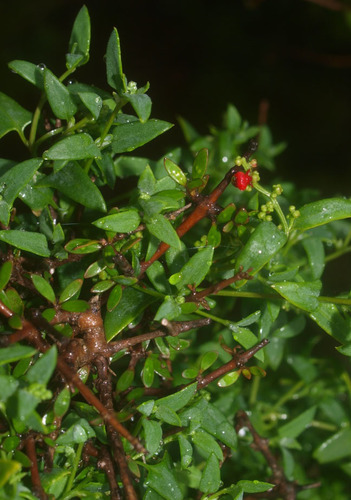
Chenopodium nutans (R.Br.) S.Fuentes & Borsch has synonyms Einadia nutans and Rhagodia nutans, and is commonly called climbing saltbush or nodding saltbush. This climbing groundcover is native to Australia. It forms a surface blanket, climbing over logs and up trees to reach around 1 metre in height. Each individual plant grows to approximately one metre in diameter. Its small semi-succulent leaves have a distinctive arrowhead shape. Leaves grow along long, vine-like branches that spread out from the centre of the plant. Both leaves and branches are light green in colour. The species produces inconspicuous green round flowers that form on the tops of terminal spikes during summer. These flowers develop into very conspicuous, tiny, bright-red berries during early autumn. Early European settlers in the Adelaide region boiled this plant alongside other saltbush species to use it as a substitute for greens. Chenopodium nutans is easy to propagate, which makes it an especially attractive and useful plant for revegetation projects. It has recently grown in popularity as a garden plant due to its low maintenance and low water requirements.