About Chelydra serpentina (Linnaeus, 1758)
Common Name & Body Build
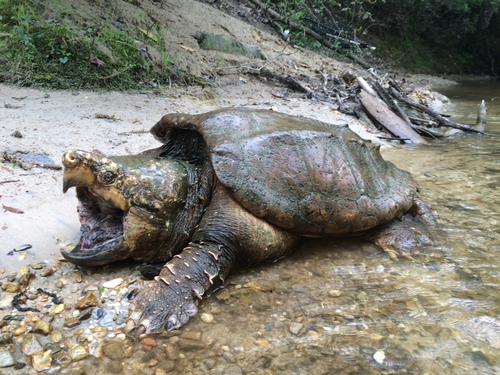
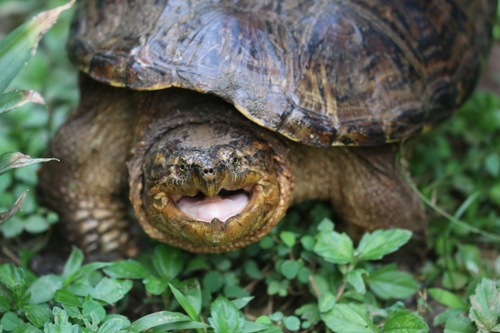
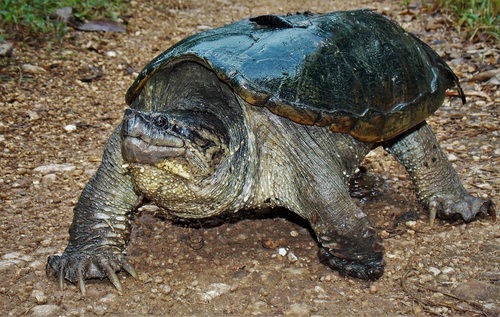
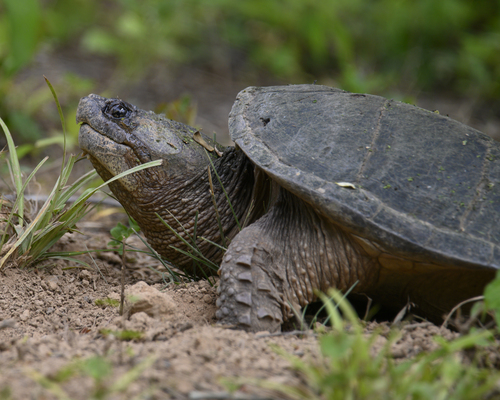
Chelydra serpentina, the common snapping turtle, has a rugged, muscular build with a ridged upper shell (carapace) that ranges in color from tan, brown, to black. Ridges on the carapace are typically more pronounced in younger individuals.
Carapace Length
Adult straight-line carapace length can reach nearly 50 cm (20 in), though 25–47 cm (9.8–18.5 in) is far more common.
Typical Adult Weight
Adults usually weigh between 4.5–16 kg (9.9–35.3 lb). One study found that breeding common snapping turtles averaged 28.5 cm (11.2 in) in carapace length, 22.5 cm (8.9 in) in plastron (lower shell) length, and weighed around 6 kg (13 lb).
Sexual Size Dimorphism
Males grow larger than females; almost all individuals over 10 kg (22 lb) are male and quite old, because this species continues growing throughout its entire life.
Exceptional Weight Records
Specimens heavier than the common weight range are exceptional: the heaviest wild individual ever caught reportedly weighed 34 kg (75 lb), and captive common snapping turtles can become overweight from overfeeding, reaching up to 39 kg (86 lb). In the northern part of the species' range, the common snapping turtle is often the heaviest native freshwater turtle.
Olfactory Ability
A 2016 study by Nakamuta et al. found that common snapping turtles have well-developed olfactory organs, nerves, and bulbs, indicating the species has a strong sense of smell.
General Habitat Types
The most common habitats for common snapping turtles are shallow ponds and streams, and some individuals live in brackish environments like estuaries. Shallow water habitats occupied by this species typically have abundant aquatic vegetation. The species is considered a habitat generalist, as it can live in most permanent bodies of water.
Basking Behavior
Common snapping turtles sometimes bask, though this behavior is rarely seen; they often bask by floating on the surface with only their carapace exposed, and in the northern parts of their range they will also readily bask on fallen logs in early spring.
Underwater Resting Behavior
In shallow water, common snapping turtles may rest on the muddy bottom with only their heads exposed, stretching their long necks up to the surface to breathe occasionally. Their nostrils sit on the very tip of the snout, and work effectively as snorkels.
Overland Movement Drivers
To reach new habitats or lay eggs, these turtles travel long distances over land. Factors including pollution, habitat destruction, food scarcity, and overcrowding drive these movements, so it is not unusual to find common snapping turtles far from the nearest water source.
Orientation Ability
Experimental data supports that common snapping turtles can sense the Earth's magnetic field, which may help guide these movements alongside other possible orientation cues.
Breeding Season Timeline
This species mates from April through November, with peak egg laying occurring in June and July. Females can store sperm across multiple breeding seasons, and use it to fertilize eggs as needed.
Nest Site Selection
Females travel over land to find sandy soil to lay their eggs, often moving some distance away from water.
Egg Laying Process
After digging a nest hole, a female typically lays 25 to 80 eggs per year. She guides the eggs into the nest with her hind feet, then covers them with sand for incubation and protection.
Egg Characteristics
The eggs have leathery, flexible shells, and measure 26–28 mm in diameter.
Incubation Period Range
Incubation time depends on temperature, and ranges from 9 to 18 weeks.
Incubation Temperature Study
One study on incubation periods incubated common snapping turtle eggs at two temperatures: 20 °C (68 °F) and 30 °C (86 °F). The study found that incubation at the higher temperature was significantly shorter, at approximately 63 days, while incubation at the lower temperature took approximately 140 days.
Hatchling Overwintering
In cooler climates, hatchlings stay in the nest to overwinter.
Cold Tolerance
The common snapping turtle is highly cold-tolerant; radiotelemetry studies have found that some individuals do not hibernate, and remain active under ice during winter.
Temperature-Dependent Sex Determination
Besides incubation time, temperature also determines the sex of developing turtle embryos: females develop at both low and high temperatures, while males develop at intermediate temperatures.
Temperature Effects on Clutches
Fall temperatures have a positive effect on clutch size and clutch mass, while spring temperatures have no impact.
Hatchling Sound Production
Researchers have recently found that common snapping turtle hatchlings produce sounds before leaving the nest to reach the surface; this sound production has also been recorded in species of the South American turtle genus Podocnemis, and the Ouachita map turtle. The hatchlings' sounds are mostly clicking noises, but sometimes include other sounds, such as creaks or sounds similar to rubbing a finger along a fine-toothed comb.
Human Culinary Use
Common snapping turtle meat is a traditional ingredient in turtle soup.
Consumption Health Risk
However, eating large quantities of common snapping turtle can pose a health risk, because toxic environmental pollutants can build up in the turtle's flesh.