About Chelostoma florisomne (Linnaeus, 1758)
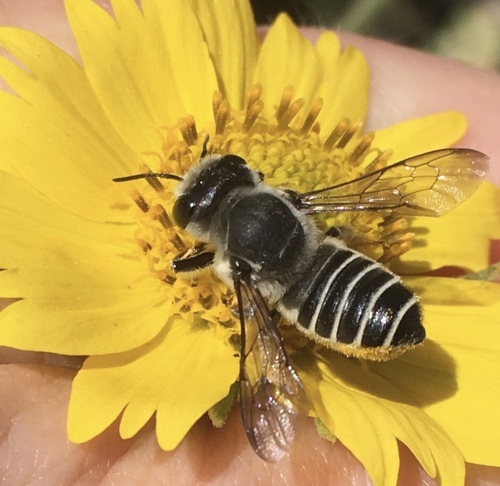
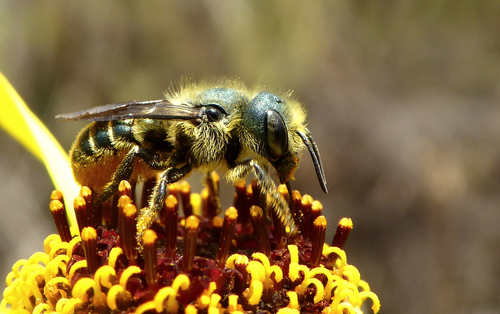
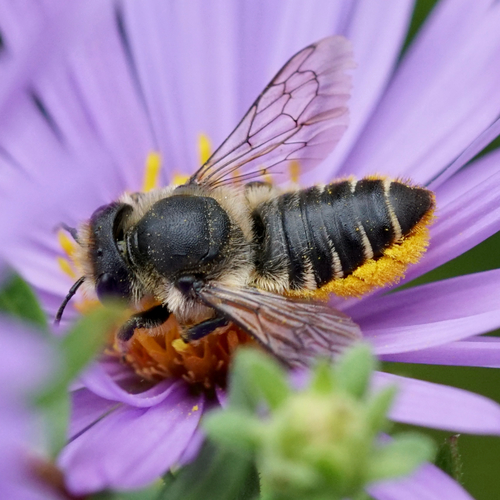
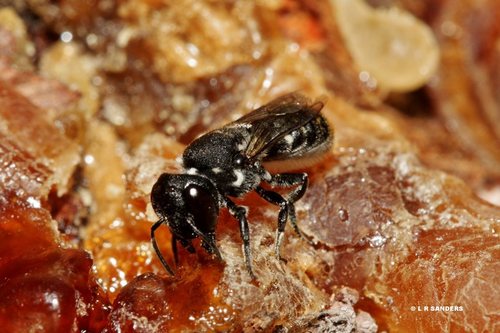
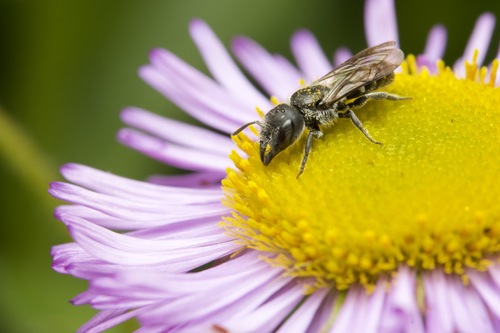
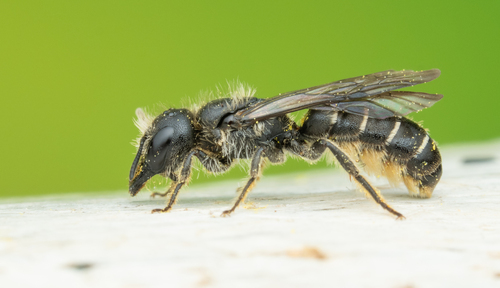
Chelostoma florisomne is a bee species that reaches an adult body length of approximately 7 to 11 millimeters, or 0.28 to 0.43 inches. Individuals of this species have a slender, cylindrical black body. Short white fringe bands run along the posterior edges of the bee's tergites, and these bands are usually filled with pollen from the species' preferred pollen host. The head of these bees is subquadrate, with very prominent mandibles. Females in particular have very long projecting mandibles and labrum. Males of the species can be identified by a wedge-shaped projection growing from their second sternite. This species is very similar in appearance to Chelostoma campanularum. This bee's distribution covers most of Europe, including Austria, Belgium, the British Islands, Czech Republic, Denmark, Finland, France, Germany, Hungary, Italy, Lithuania, Luxembourg, European Russia, Poland, Slovakia, Slovenia, Spain and Switzerland, as well as North Africa. These bees live in forests, meadows, slopes and orchards where buttercups of the Ranunculus genus are present.