About Charissa obscurata (Denis & Schiffermüller), 1775
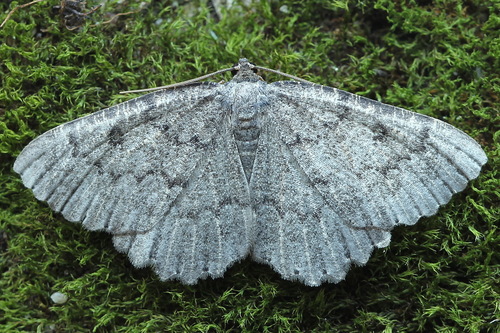
Charissa obscurata, commonly called the annulet or Scotch annulet, is a moth belonging to the family Geometridae. This species was first formally described by Michael Denis and Ignaz Schiffermüller in 1775. Its distribution covers most of Europe, including the European portion of Russia, and it also occurs in Asia Minor, the Caucasus, Armenia, and Azerbaijan. In mountain regions, this species can be found at elevations up to 1800 meters. Its preferred habitats include rocky dry grasslands, boulder corridors, quarries, rocky steppe heaths, and wine-growing areas. The moth has a wingspan ranging from 27 to 32 mm. A key characteristic of this species is the circular O-shaped markings on all four wings, though these markings can sometimes appear indistinct. The forewings feature strongly toothed lines, which continue onto the pattern of the hindwings. The margin of the large hindwing is very heavily ruffled and incised, a trait that distinguishes this moth from other species in the Charissa genus. The larvae are smooth and grey-brown in color. Adult moths are active in flight from July to August. The larvae feed on a variety of herbaceous plant species, including Calluna species, Viscaria vulgaris, Sedum telephium, and Rubus species.