About Charidotella sexpunctata (Fabricius, 1781)
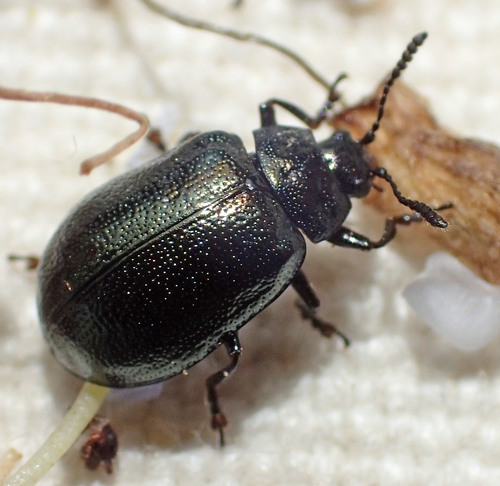
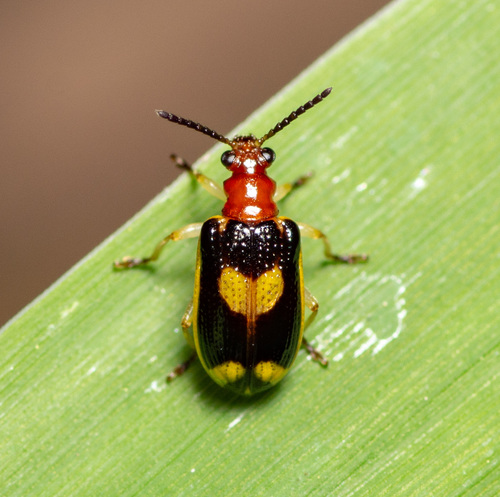
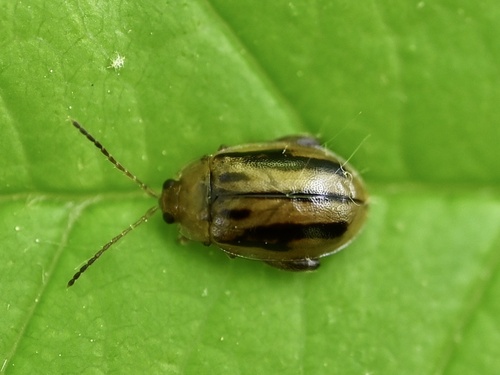
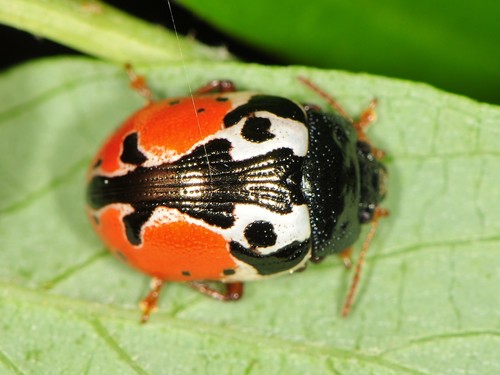
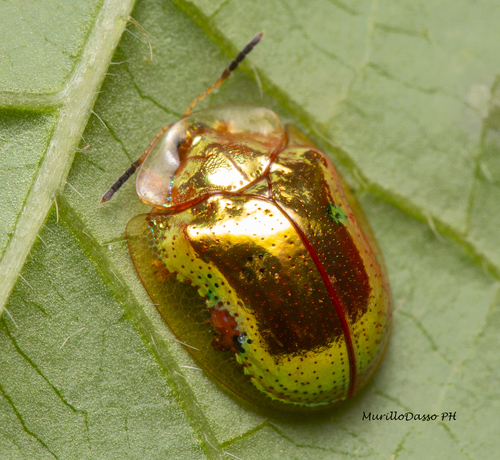
Adult Charidotella sexpunctata measure 5–7 millimetres (0.2–0.3 in) in length. Their body color varies widely, ranging from reddish-brown with black spots to brilliant, mirror-like gold, which gives the species the common nickname "goldbug". The margins of their elytra (wing covers) are expanded and nearly transparent. The color of this beetle changes over the course of its development, during mating, and when it experiences disturbance, such as being touched by a human researcher. Scientists have not yet studied the mechanism that drives color change in this specific species. However, color change in the related species Charidotella egregia, the Panamanian golden tortoise beetle, occurs when the elytra undergo hydration and dehydration. Adults of both of these species can shift from shiny gold to reddish-brown when disturbed. In the species' life cycle, female Charidotella sexpunctata lay clusters of eggs on plant stems and on the undersides of host plant leaves. A spiny larva, yellowish or reddish brown in color, hatches from its egg between 5 and 10 days after laying. The larva accumulates its shed skins and frass (fecal matter) on a structure called an anal fork, which it holds over its body to form a fecal shield that works to hide the larva from predators. This defense is usually effective against smaller insect predators like ants, but not against larger predators such as hemipterans. After two to three weeks of development, the larva becomes a spiny brown pupa covered in frass. One to two weeks after pupation, an adult beetle emerges.