About Chamelaucium uncinatum Schauer
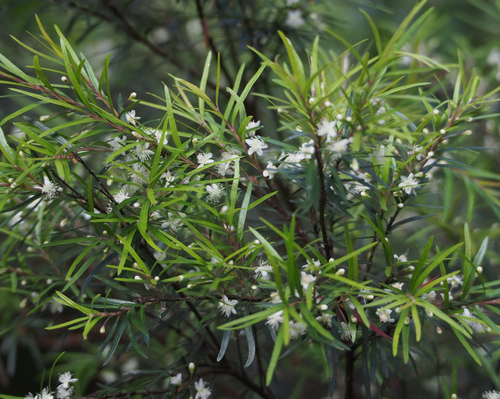
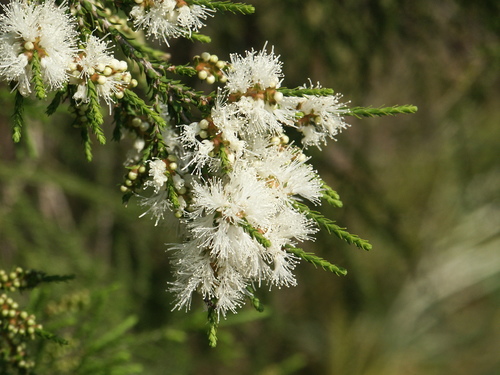
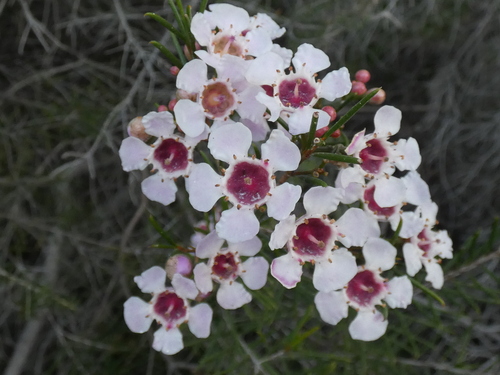
Chamelaucium uncinatum, commonly called Geraldton waxflower or Geraldton wax, is a flowering plant endemic to Western Australia. It grows as an erect shrub between 0.5 and 4 meters tall, and produces white or pink flowers from June to November. Its specific epithet uncinatum is Latin for "hooked", a reference to the hooked tips of the plant's leaves. The flowers, which are somewhat similar in appearance to tea tree flowers, retain their freshness for a relatively long time after being cut. This quality has made the plant popular in horticulture, and it is now widely cultivated across Australia both in private home gardens and for the cut flower industry. Cultivars with purple flowers have also been developed. In cultivation, Geraldton waxflower is relatively hardy and fairly easy to grow in a Mediterranean climate, where it requires a sunny position and well-drained sandy soil. It can be grown in regions with higher humidity, such as Sydney, but it typically has a shorter lifespan in these environments. It grows well in pots, but it has a tendency to fall over and may need structural support. It is extremely drought-tolerant, and its leaves have an aromatic scent. Because of its hardy characteristics, it is used as a rootstock for grafting species from the closely related featherflower genus Verticordia.