About Chalcosoma chiron (Olivier, 1789)
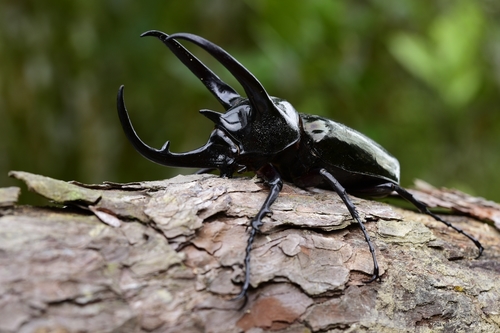
Chalcosoma chiron, commonly called the Caucasus beetle, is a species of beetle. Males of this species reach a body length of 90–130 mm (3.5–5.1 in), while females grow to 50–60 mm (2.0–2.4 in). Caucasus beetles are the largest species in the genus Chalcosoma and one of the largest beetles found in Asia. They show distinct striking sexual dimorphism. Males have large, specialized curved horns on the head and thorax, which they use to fight other males to win mating access to females. Females are significantly smaller than males. The elytra of females have a velvety texture, because they are covered in tiny hairs. Caucasus beetles are often mistaken for Atlas beetles, but can be distinguished by the presence of a small tooth on their lower horns. The grubs of Chalcosoma chiron go through three molts, and typically spend 12–15 months living underground; larger male grubs remain in the grub stage for longer than female grubs. The pupal stage lasts 1–2 months, and adult beetles live for 3–5 months. Adult females have a longer lifespan than adult males.