About Chalcoela iphitalis Walker, 1859
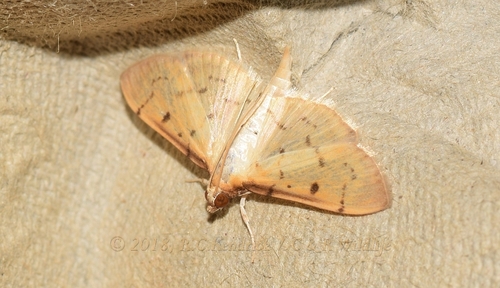
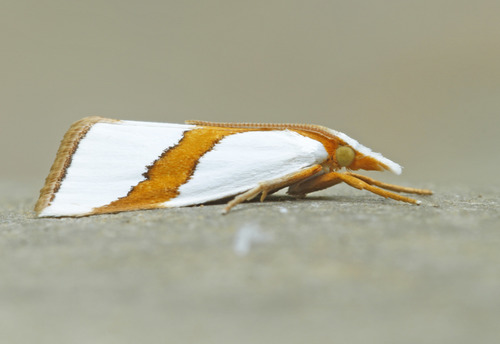
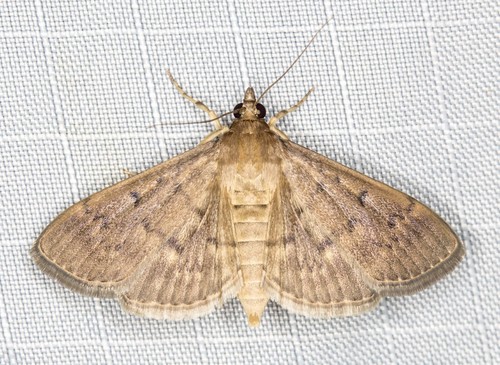
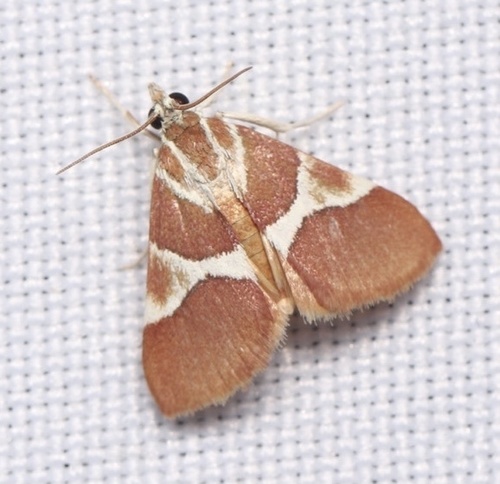
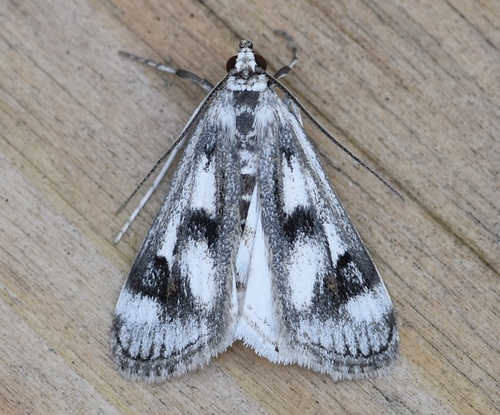
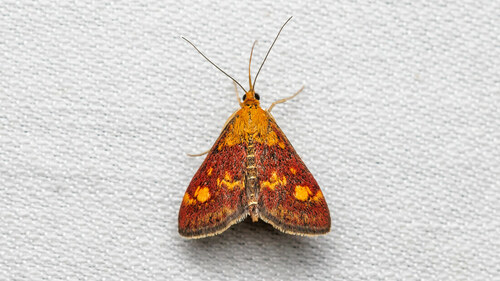
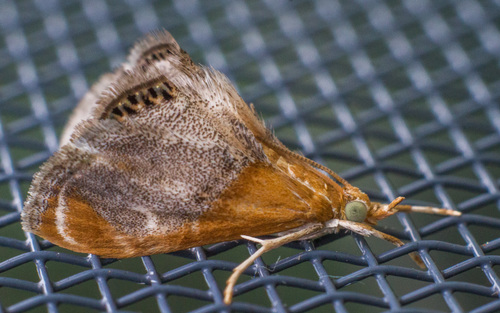
Chalcoela iphitalis, commonly called the sooty-winged chalcoela, is a moth species in the family Crambidae found across North America. Its range extends south to California, Arizona, and South Carolina, and north to Ontario. Adult moths are active from May to August. The head, body, and front section of the forewings are yellow-orange, while the hindwing and back section of the forewings are grey and silver. The back edge of the hindwing bears black spots. This species was first described by Francis Walker in 1859, under the original name Cataclysta iphitalis. The larvae of Chalcoela iphitalis are parasitoids that feed on the larvae of paper wasps. Recorded host species include Polistes dominula, Polistes exclamans, Polistes metricus, Mischocyttarus flavitarsis, and Polistes apachus. For the host species Mischocyttarus flavitarsis, Chalcoela iphitalis larvae often invade the wasps' nest cells at night, when the wasps cannot see the intruding larvae. The parasite larvae move between nest cells to consume the wasp larvae and pupae. After feeding is complete, they pupate by spinning cocoons inside empty wasp nest cells. Mischocyttarus flavitarsis wasps do not attempt to remove the parasite larvae from their nests. Instead, they either continue occupying the infested nest, or abandon it to build a new nest elsewhere.