About Chaerophyllum bulbosum L.
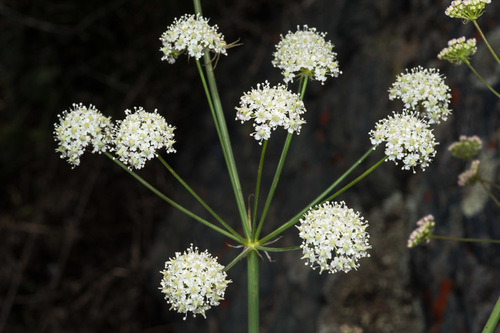
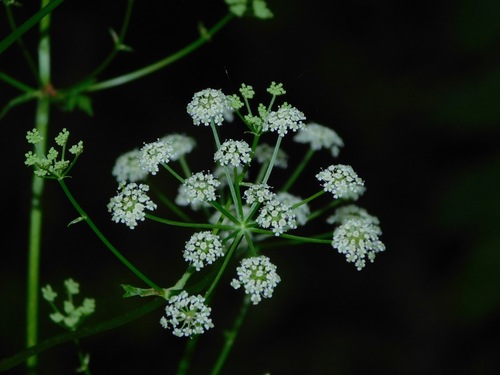
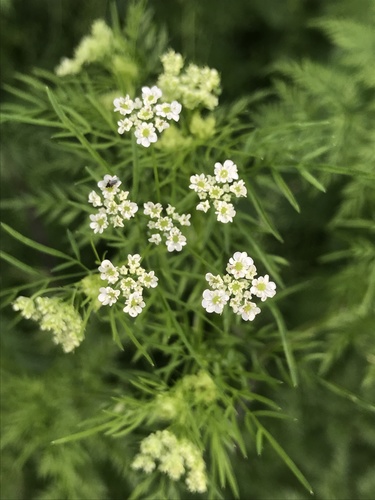
Chaerophyllum bulbosum is a species of flowering plant in the carrot family, known by multiple common names: turnip-rooted chervil, tuberous-rooted chervil, bulbous chervil, and parsnip chervil. It is native to Europe and Western Asia, and was a popular vegetable during the 19th century. This species is a tall annual herb that produces fringelike divided leaves and large umbels of white flowers. It is cultivated on a small scale in parts of Europe for its edible tubers, which resemble dark gray carrots with yellowish-white flesh. After harvest, the tubers are stored for several months in cold conditions; during storage, amylase enzymes break down starch into sugar, increasing the tuber’s sugar content. In cuisine, the tubers are used for flavoring or cooked like other root vegetables. Much of the plant’s flavor comes from the tuber’s skin, and its aroma becomes more intense the longer it is stored. Eaten raw, the tuber has a somewhat sharp taste similar to radish. When cooked, it has a subtle flavor reminiscent of potatoes and chestnuts, with a slight pungent taste similar to celery and parsnip. C. bulbosum roots are high in fiber, have a starchy content similar to potatoes, and contain B vitamins, vitamin C, and mineral salts. Cultivation of C. bulbosum is similar to cultivation of carrots and parsnips. It grows best in light, fertile, moderately moist soils. The total cultivation period is between 9 and 10 months. C. bulbosum seeds require exposure to cold temperatures (a process called vernalization) to break dormancy in spring, so planting starts in autumn. Dormancy ends after at least 8 weeks of continuous humidity at temperatures below 5 °C. After stratification, germination is optimal when temperatures range between 5 and 10 °C. Germination is significantly inhibited at temperatures above 25 to 30 °C. Seeds are sown directly in the ground from September to November, with no separate seedling cultivation. Row spacing is typically 20 to 25 cm, with 4 to 6 cm of space between individual seeds. After sprouting in spring during the first growing year, the tuber develops alongside a leaf rosette that grows just above ground level. Voles are a common pest for this crop when grown in the field. Tubers reach maturity when their leaves turn yellow in June, and the main harvest window runs from July to September. Because seeds require a dormancy period, sowing directly after harvest for the next growing season is almost mandatory. Combined with low crop yields and poor seed germination rates, this requirement has prevented C. bulbosum from becoming widely adopted in commercial cultivation. The main method of propagation is sexual propagation using saved seeds collected after root harvest. The seeds are short-lived, meaning they lose viability easily, especially when stored in dry seed packets, so fresh seeds should be used every year. Storing seeds in cool, slightly damp sand can help preserve their viability. Flies and beetles act as pollinators for C. bulbosum. Tuberous-rooted chervil can develop the same diseases and pests that affect carrots, parsnips, and other members of the Apiaceae family. The most common issues are carrot fly, storage decay, and root aphids. It can also act as a host for other aphids, Erysiphe heraclei, and celery mosaic virus.