About Chaenomeles japonica (Thunb.) Lindl. ex Spach
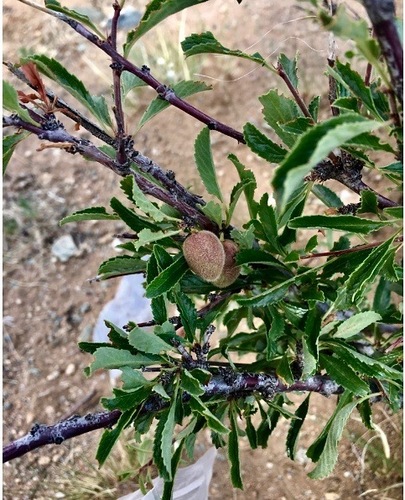
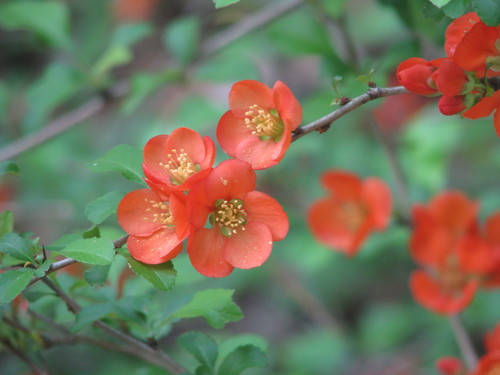
This species is a bulky, thorny shrub with widely spreading branches that grows between 0.6 and 2.0 meters tall. Its leaves are lanceolate to obovate, roughly toothed, and glabrous even when young. Including the petiole, the leaves measure 4 to 5 inches long and 2 to 3 inches wide. The species has unusually large, kidney-shaped stipules with serrated edges that are 1 centimeter long and 1.5 to 2 centimeters wide; these stipules only appear on long shoots. It blooms in winter before new leaves bud, and blooms again with fewer flowers in summer. Flowers typically grow in clusters of 2 to 3, and range in color from orange to brick red. Open flowers are 3 to 4 centimeters wide. In Japanese, the fruit of this plant is called Kusa-boke (草木瓜). The plant produces golden-yellow, apple-shaped fruit 4 to 7 centimeters in diameter, which contains red-brown seeds. The fruit is edible, but it is hard and astringent unless it is bletted or cooked. Like all rose family fruits, the fruit pulp is non-toxic, while the kernels hold small amounts of poison. The fruit is occasionally used to make jam, jelly, and pie, as a substitute for the related true quince, Cydonia oblonga. C. japonica is also commonly grown for bonsai. It can grow in all soil types, but grows very slowly in calcareous soil.