About Chaenactis thompsonii Cronquist
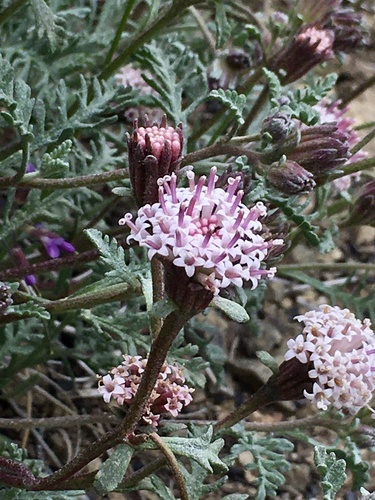
Chaenactis thompsonii Cronquist is a perennial plant that grows up to 30 centimeters (12 inches) tall. It usually does not form large, extensive clumps or mats. Each of its vegetative branches can produce 1 to 3 flower heads. Each flower head contains only white or pale lavender disc florets, with no ray florets present. The flower stalks, called peduncles, and the floral bracts that make up the involucre are covered in dense wooly tomentose hairs. This species produces multiple stems, and its leaves are sparsely covered in wooly hairs. The leaves are singly pinnate, with 2 to 5 pairs of generally flat, smooth-edged entire lobes. It can be compared to the somewhat similar species Chaenactis douglasii, which is much more widespread. Chaenactis douglasii usually has doubly pinnate leaves, grows much taller flowering stems, and does not grow in serpentine soils. Chaenactis thompsonii is endemic to the Wenatchee Mountains, located in the north-central Cascades of Washington State, USA. It grows in full sun and has a strong association with rocky serpentine soils. Alongside Lomatium cuspidatum, Oreocarya thompsonii, and Poa curtifolia, it is a strong indicator species for serpentine soils in this local area.