About Ceroxylon quindiuense (H.Karst.) H.Wendl.
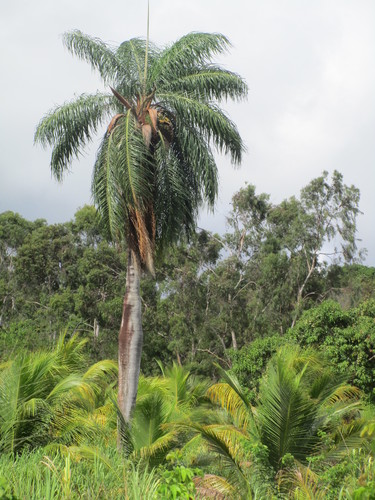
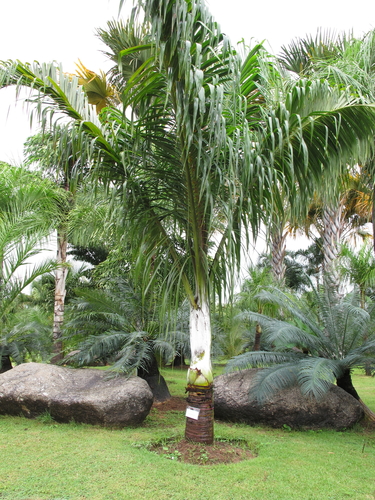
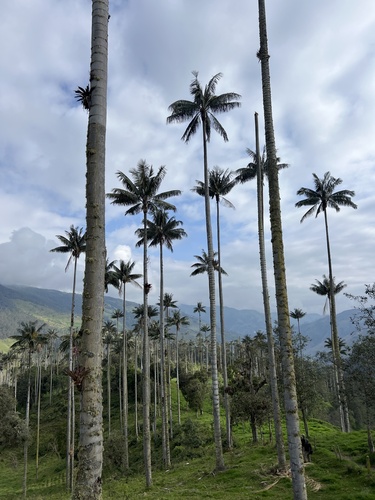
Ceroxylon quindiuense (H.Karst.) H.Wendl. is a palm species and the tallest recorded monocot in the world. This palm typically reaches 45 m (148 ft) in height, and rarely can grow as tall as 60 m (200 ft). It has a cylindrical, smooth, light-colored trunk covered in wax, with dark rings around the trunk formed by leaf scars. Its leaves are dark green and grayish, measure 185–540 cm (6.1–17.7 ft) in length, and have a petiole that can grow up to 80 cm (31 in) long. When ripe, its globose fruits are orange-red and 1.6–2 cm (0.6–0.8 in) in diameter. This species grows in large, dense populations along the central and eastern Andes of Colombia, occurring only rarely in the western Colombian Andes, and has a disjunct distribution in the Andes of northern Peru. It grows at elevations between 2,000 and 3,100 m (6,600 and 10,200 ft) above sea level, and reaches minimum reproductive age at 80 years. Wax palms provide habitat for many unique organisms, including endangered species such as the yellow-eared parrot (Ognorhynchus icterotis). Historically, trunk wax from this palm was used to make candles, especially during the 19th century. The outer part of the palm's stem has been used locally for house construction, and was once used to build water supply systems for impoverished farmers. It is cultivated as an ornamental plant in Colombia and California.