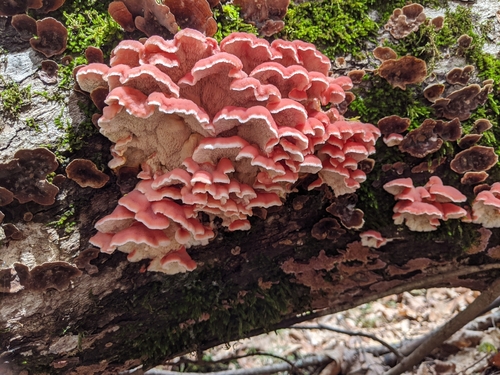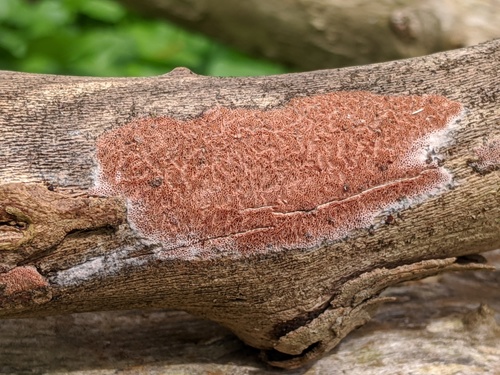
About Ceriporia purpurea (Fr.) Donk
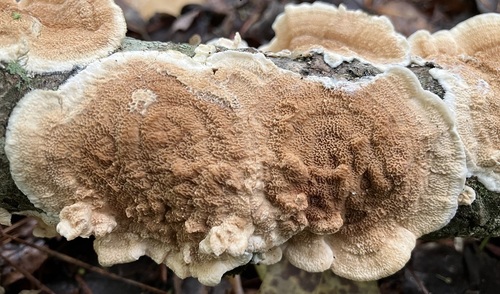
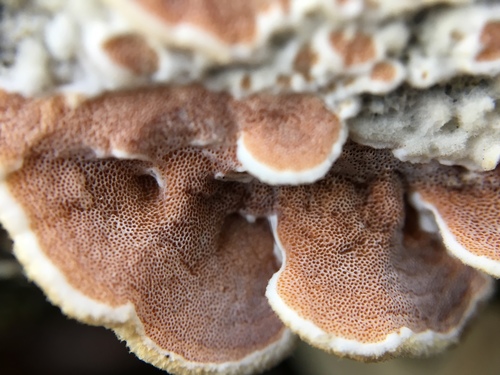
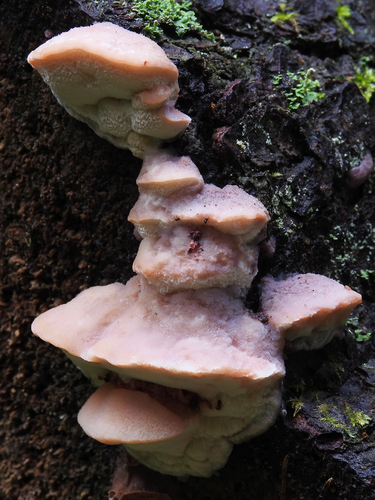
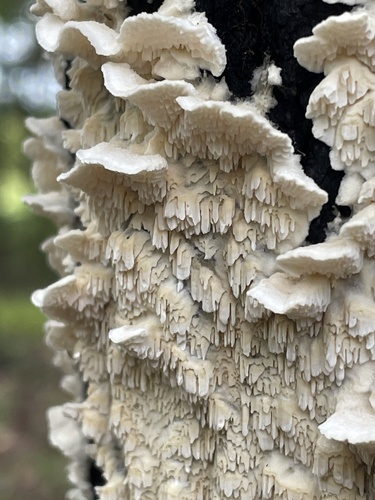
Ceriporia purpurea is a species of crust fungus that belongs to the family Irpicaceae. It was first formally described in 1821 by Swedish mycologist Elias Magnus Fries under the name Polyporus purpureus. Marinus Anton Donk gave this fungus its current accepted scientific name in 1971 when he transferred it to the genus Ceriporia. A 2016 study identified six similar species within the genus Ceriporia that together form what is called the Ceriporia purpurea group. These species are Ceriporia bresadolae, the two European species C. torpida and C. triumphalis, and the two North American species C. manzanitae and C. occidentalis. Ceriporia purpurea has a wide distribution across the temperate zone of Eurasia, grows only on decomposing wood from deciduous trees in this region, and is also found in northeastern North America.