About Ceriagrion glabrum (Burmeister, 1839)
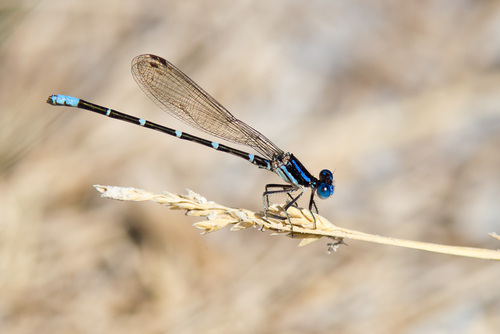
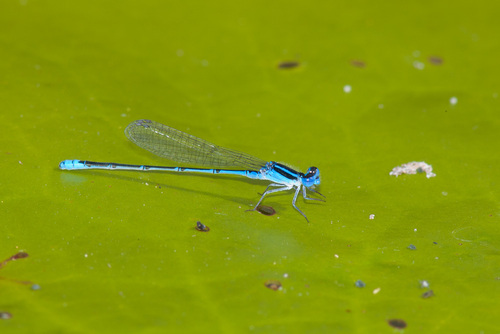
Ceriagrion glabrum is a small to medium-sized damselfly, reaching a maximum body length of 46 mm (1.8 in) and a maximum wingspan of 53 mm (2.1 in). It has greenish eyes topped with a dark grey cap. Like many damselfly species, Ceriagrion glabrum displays strong sexual dimorphism. Males have bright orange, unmarked abdomens and thoraxes, with a paler yellow-orange shade along the sides of the abdomen. Female body color ranges from brown to green to orange, and females become more orange as they age, though they never attain the same vivid brightness seen in males. This is the most common and widespread Ceriagrion species native to Africa. It has been recorded in Angola, Botswana, Burkina Faso, Burundi, Cameroon, Chad, the Republic of the Congo, the Democratic Republic of the Congo, Ivory Coast, Egypt, Equatorial Guinea, Ethiopia, Gabon, Gambia, Ghana, Guinea, Kenya, Liberia, Madagascar, Malawi, Mali, Mauritius, Mozambique, Namibia, Niger, Nigeria, Réunion, São Tomé and Príncipe, Senegal, Seychelles, Sierra Leone, Somalia, South Africa, South Sudan, Tanzania, Togo, Uganda, Zambia, and Zimbabwe, and is thought to also occur in Sudan. It inhabits a wide range of freshwater environments, including marshes, ponds, dams, pans, and the quiet backwaters of rivers and streams. It favors sites with abundant reeds, grasses, and sedges. This damselfly perches and flies among the stems of reeds, grasses, and sedges, and primarily uses low perches close to the water. Adult Ceriagrion glabrum can only manage short, weak flight. While they are most often found near water, they also regularly occur some distance away from aquatic habitats. They can act as fierce predators of smaller damselflies, particularly targeting young, still soft-bodied individuals.