About Cereus hildmannianus K.Schum.
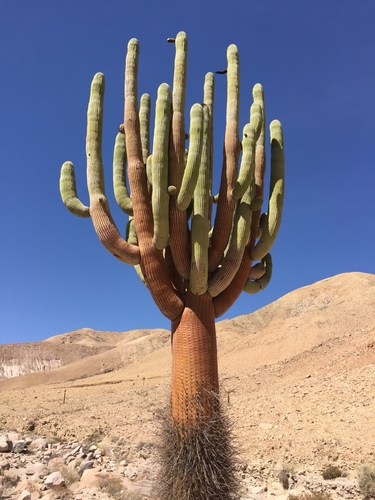
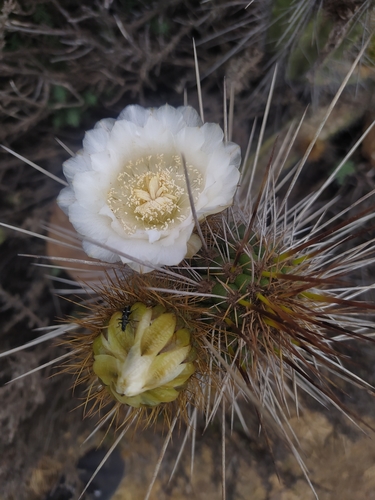
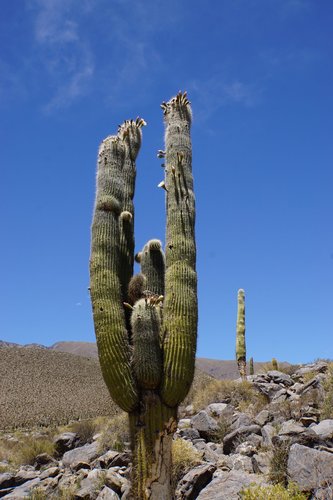
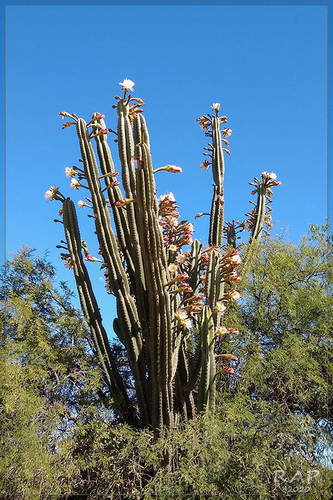
Cereus hildmannianus K.Schum. has a tree-like growth habit with a distinct trunk, after which it branches freely to reach up to 10 m (33 ft) in height. Its stems are divided into segments, with a diameter reaching up to 15 cm (6 in), and have 4–6 ribs. The cylindrical, segmented shoots range in color from blue-green to cloudy green; they are often blue-green when young, fading to a duller green as they age. Stems are usually spineless, with the exception of the subspecies uruguayensis. The four to six sharp-edged ribs are up to 3.5 centimeters high, and the areoles on the stems are small. Thorns are typically not produced. Cereus hildmannianus is believed to be widespread across Brazil (specifically Mato Grosso do Sul), Paraguay, Uruguay, Bolivia, and Argentina. It grows in sandy, rocky soils, outcrops, and on cliffs, and can occasionally grow as an epiphyte on trees and shrubs. This species blooms from October to February; its flowers are nocturnal and close in the morning. All parts of the plant are edible to local fauna. In Rio Grande do Sul, it is grown as an ornamental, and its fruits are valued by the local population. Birds commonly use this cactus to build their nests. For cultivation, abundant watering is needed during the growing season, and very little watering is required during the rest period. The species can tolerate some cold, even a few degrees below zero Celsius, if its growing soil is kept dry. Young plants require shade, while mature plants need full sun.