About Cercartetus nanus (Desmarest, 1818)
Taxonomic Identity
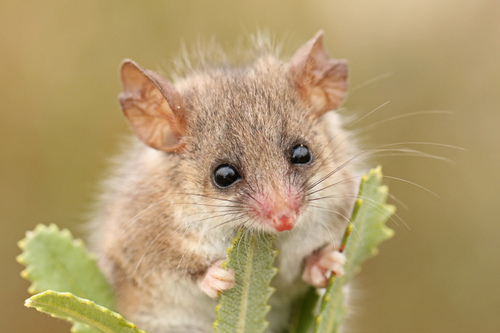
Eastern pygmy possums, with the scientific name Cercartetus nanus (Desmarest, 1818), are very small marsupials.
Size Measurements
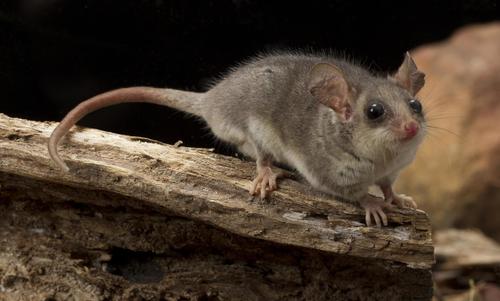
Adults weigh 15 to 43 grams (0.53 to 1.52 oz), have a body length of 7 to 9 centimetres (2.8 to 3.5 in), and a tail measuring 8 to 11 centimetres (3.1 to 4.3 in).
Body Fur Coloration
Their fur is dull grey on the upper body and white on the underbody.
Facial Features
They have large, forward-pointing, almost hairless ears, long whiskers, and a narrow ring of dark fur surrounding each eye.
Tail Structure
Their long prehensile tail is thickly furred at the base, with sparser fur toward the tip.
Activity Pattern
Eastern pygmy possums are active climbers and nocturnal.
Primary Diet
They use their brush-tipped tongue to feed primarily on nectar and pollen from Banksia, Eucalyptus, and Callistemon species.
Supplementary Diet
They also eat insects, and will consume soft fruits when flowers are not available.
Shelter Sites
This species is largely solitary, and shelters in tree hollows, tree stumps, abandoned bird nests, and thickets.
Winter Torpor
During winter, individuals enter torpor to conserve energy.
Communal Nesting
While generally considered solitary, eastern pygmy possums have been recorded sharing communal nests, and groups of two or more adult individuals have been observed.
Home Range Size
Male eastern pygmy possums have home ranges of 0.24 to 1.7 hectares (0.59 to 4.20 acres); these ranges overlap with each other and also overlap with the smaller home ranges of females, which measure 0.18 to 0.61 hectares (0.44 to 1.51 acres).
Geographic Distribution
Eastern pygmy possums are distributed along the southeastern Australian coast, ranging from eastern South Australia to southern Queensland, and also live in Tasmania.
Habitat Range
They inhabit shrubby vegetation across a wide variety of habitats, including open heathland, shrubland, sclerophyll forest, and rainforest, from sea level up to 1,800 metres (5,900 ft) in elevation.
Population Structure
Even though they can live in many different habitat types, their distribution is patchy, and their populations are usually small in areas where they do occur.
Breeding Frequency
Eastern pygmy possums typically breed twice per year, but may breed a third time if food is abundant.
Female Reproductive Traits
Females have a well-developed pouch with four to six teats, and usually give birth to four young, though larger litters are not uncommon.
Gestation Period
Gestation lasts around 30 days.
Pouch Development Period
After birth, young stay and develop in the mother’s pouch for 33 to 37 days.
Weaning Timeline
They are weaned at 60 to 65 days of age, and remain with their mother for at least an additional ten days.
Juvenile Weight At Independence
By the time they leave their mother, they weigh approximately 10 grams (0.35 oz).
Maturation Timeline
Young eastern pygmy possums reach full adult size at around five months old, and may be able to breed as early as three months after birth.
Lifespan
Captive individuals can live up to 7.5 years, while wild individuals probably live no more than five years.