About Ceratophrys cornuta (Linnaeus, 1758)
Nomenclature
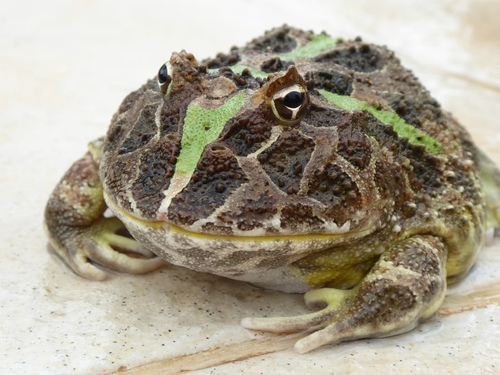
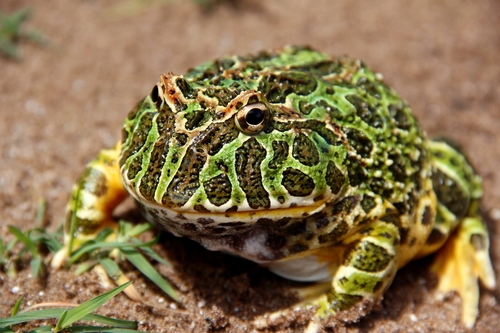
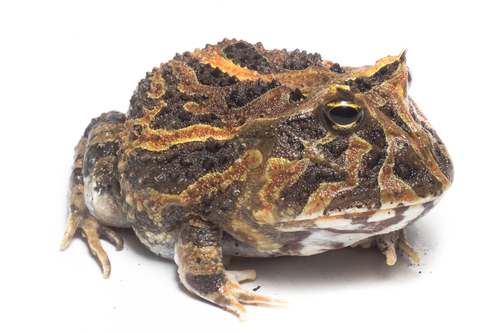
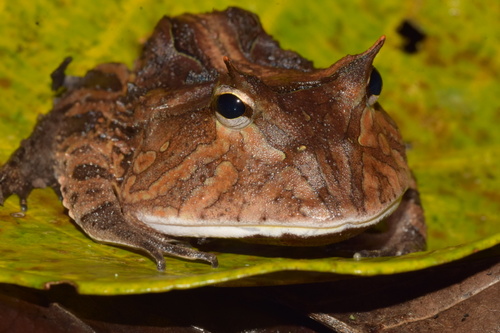
The Surinam horned frog, scientifically named Ceratophrys cornuta (Linnaeus, 1758), is also commonly called the Amazonian horned frog.
Size and Distribution
This bulky frog can grow up to 20 centimetres (7.9 inches) long, and lives in the northern region of South America.
Distinctive Morphology
It has an unusually wide mouth, with horn-shaped projections above its eyes.
Reproductive Traits
Females of this species lay up to 1,000 eggs in a single clutch, and wrap the eggs around aquatic plants.
Adult Diet
The adult Surinam horned frog feeds on other frogs, fish, lizards, and mice.
Tadpole Behavior
Immediately after hatching, Surinam horned frog tadpoles attack both other tadpoles of their own species and tadpoles from other species.
Previous Taxonomic Classification
This species was once classified as the same species as Ceratophrys ornata.
Taxonomic Distinction from C. ornata
The classification dispute was resolved when it was confirmed that the Surinam horned frog occupies a different habitat than its smaller cousin C. ornata, and does not interbreed with C. ornata in the wild, though the two species will interbreed in captivity.
Interspecific Predation
The Surinam horned frog is known to prey on other horned frog species, especially the northern race of Ceratophrys ornata.