About Ceratomia catalpae Boisduval
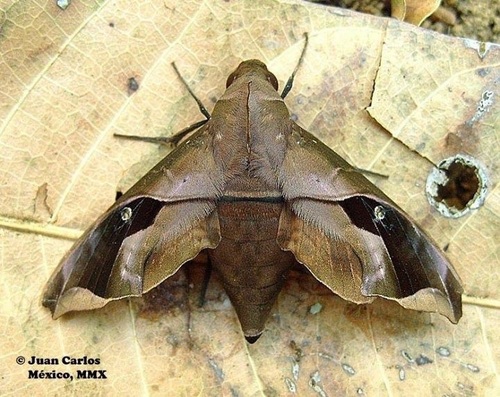
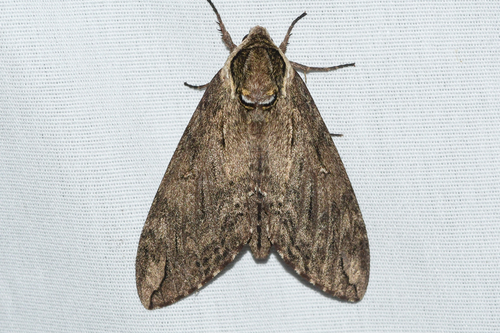
Ceratomia catalpae, commonly called the catalpa sphinx or the Catawba worm, is a species of hawk moth in the family Sphingidae. This species was first formally described by Jean Baptiste Boisduval in 1875. The species is native to southeastern North America, where it lives on catalpa trees. Its recorded range extends from Maine in the northeast, west to Iowa, and south to Florida, the Gulf States, and Texas. From egg laying to pupation, the life cycle of this moth takes approximately four weeks to complete. In areas with multiple generations per year, adult moths emerge from pupae after two weeks, or when environmental conditions are favorable. Adult catalpa sphinx moths are dull brown, and do not have the striking coloration seen in their larval (caterpillar) stage. During large population outbreaks, caterpillars of this moth can cause significant damage to catalpa trees. The first ever trial of aerial crop dusting was conducted in an attempt to control this species. However, newer research suggests the caterpillars are less harmful than originally thought. Stephen L. Peele, curator of the Florida Mycology Research Center, has documented that catalpa trees can survive being completely defoliated multiple times in a single summer and still return to full health. Peele notes that no other tree can survive this level of defoliation, stating "They always come back. They always look healthy," and that he is investigating a potential symbiotic relationship between the caterpillars and the trees. This moth feeds on two species of catalpa: southern catalpa (Catalpa bignonioides) and northern catalpa (Catalpa speciosa). Humans use the caterpillars of Ceratomia catalpae as fishing bait to catch bass, bream, and catfish.