About Ceratomia amyntor Geyer
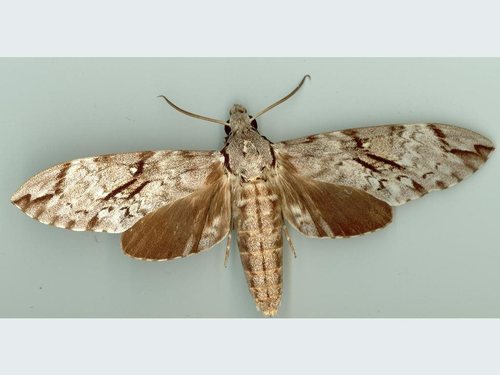
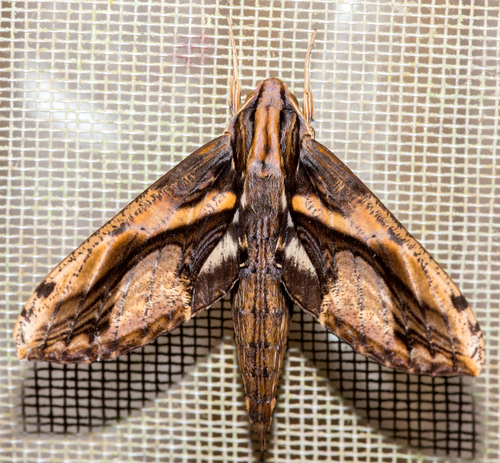
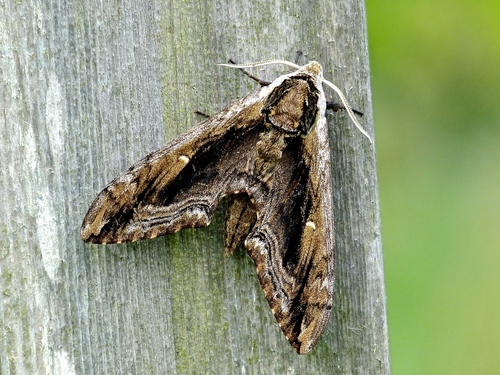
Ceratomia amyntor, commonly known as the elm sphinx or four-horned sphinx, is a North American moth belonging to the family Sphingidae. This species was first described by Carl Geyer in 1835. Its wingspan ranges from 3+1⁄4 to 4+1⁄2 inches (8.2 to 11.5 cm). As its common name suggests, the larval caterpillar stage feeds on elm trees of the genus Ulmus, but caterpillars can also be found feeding on birch (Betula), basswood (Tilia), and cherry (Prunus), as well as tomato plants and pepper plants. When caterpillars are ready to pupate, they crawl to the base of their host tree, move underneath the soil to pupate, and may overwinter underground if they reach this stage late in the year. Vegetable growers should be aware of these larvae because of their insatiable appetite: a single larva is capable of devouring large amounts of plant foliage and even soft, fleshy stems. The range of C. amyntor extends from Nova Scotia westward to Alberta, western North Dakota, and Colorado, and southward to Florida, the Gulf Coast, Georgia, Texas, Louisiana, and New Mexico. In the northern parts of its range, adult C. amyntor fly as a single generation (brood) from June to July. Further south, there are two broods that fly later into the year, and five broods have been confirmed in Louisiana from March to October. Recorded food plants for the species are Ulmus (elm), Betula (birch), Tilia (basswood), Prunus (cherry), tomato plants, and pepper plants.