About Ceratiola ericoides Michx.
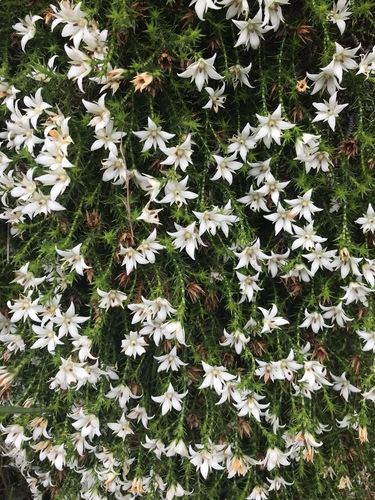
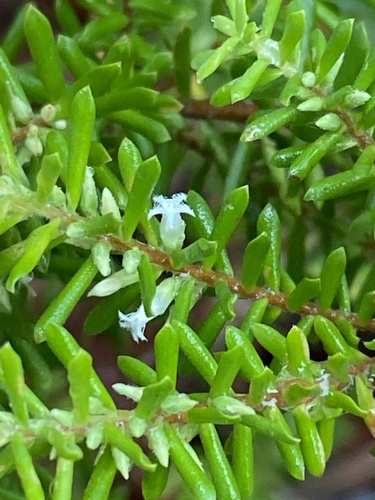
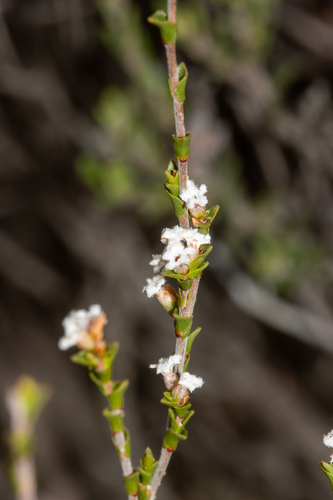
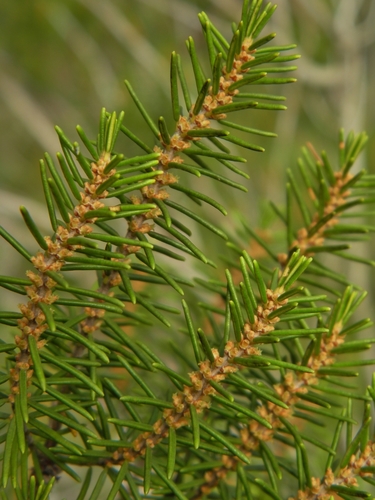
Florida rosemary, scientifically named Ceratiola ericoides Michx., grows as a rounded, densely branched shrub that can reach up to 1.8 metres (6 ft) tall. Its dark green, needle-like leaves are 8 to 12 mm long and 1 mm wide, and carry a scent similar to culinary rosemary. This species produces small yellow to brown flowers; its green or yellow fruit is a juicy 3-millimetre (1⁄8 in) diameter drupe that holds two seeds. This shrub is native to the subtropical scrub and dry sandy habitats of the Atlantic Coastal Plain in the southeastern United States. Its native range covers Georgia, South Carolina, the entire state of Florida, and the coastal counties of Alabama and Mississippi. It is commonly found in Florida scrub habitats growing alongside sand pine and evergreen scrub oaks. Florida rosemary is dioecious and pollinated by wind. Its flowers grow in the leaf axils of growth produced the previous year, and bloom from September through October. Fruits ripen from January through April, and both flowers and fruits can stay on the plant year-round. Individual plants do not produce seeds until they are 10 to 15 years old. Seed production per plant increases until plants reach 20 to 30 years of age, and begins to decline once plants are over 35 years old. Florida rosemary releases a chemical called ceratiolin into the surrounding soil. Ceratiolin breaks down into hydrocinnamic acid, which inhibits the growth of other plants as well as Florida rosemary seeds, an interaction known as allelopathy. When soil is disturbed by fire, microbial decomposition, or other processes, hydrocinnamic acid breaks down, allowing other plants to grow and Florida rosemary seeds to germinate. The fruit and seeds of Florida rosemary are primarily eaten by the Florida harvester ant, oldfield mouse, eastern towhee, and Florida scrub jay. Seeds consumed by ants and mice are destroyed, while seeds from fruits eaten by birds pass through the birds' digestive systems unharmed. Seeds stored in soil lose viability in less than 10 years. Florida scrub communities typically experience wildfires at intervals ranging from 15 to 100 years, and these fires kill all existing plants, including mature Florida rosemary. If a scrub patch burns less than ten years after the previous fire, there will not be viable Florida rosemary seeds remaining in the soil to grow new plants. Researcher Johnson has suggested that the observed decline in seed production after plants reach 35 years of age indicates fires typically occur no more than 40 years after the previous fire, so there is no evolutionary selective pressure for plants to maintain high seed production after reaching 40 years old.