About Cerastium arvense L.
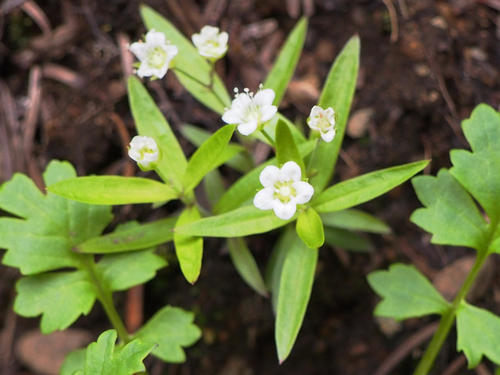
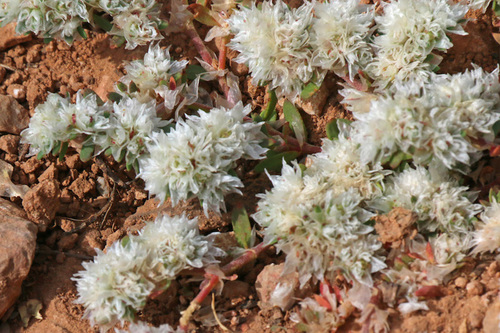
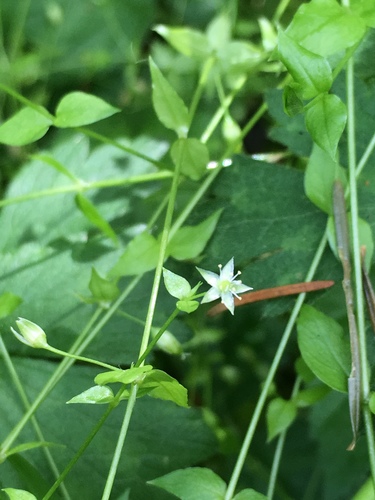
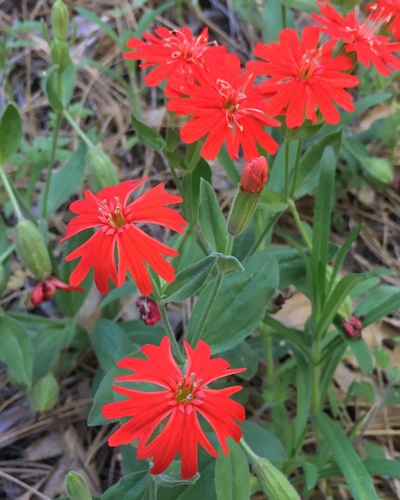
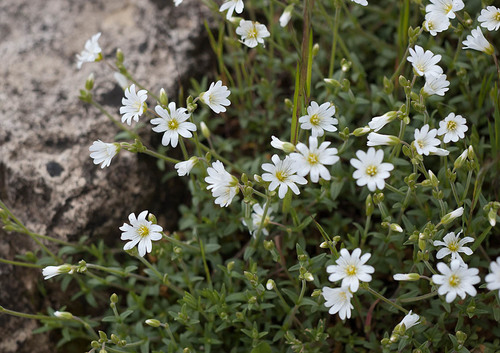
Cerastium arvense L. (field mouse-ears) is a perennial herb that reaches a height of 30–45 cm (12–18 in). It can grow as a mat, clump, creeper, or upright flowering plant, and develops from either a taproot or a tangled network of rhizomes. Its texture is typically somewhat hairy, often with glandular hairs. The leaves are linear, lance-shaped, or oblong, and measure a few centimeters long. Its inflorescence can range from a single flower to a dense cluster of many flowers. Each flower has five white petals, each divided into two lobes, and five hairy green sepals at its base. The fruit is a capsule up to 1.5 cm (0.59 in) long, with ten tiny teeth at its tip, and it holds several brown seeds. Among wildflower gardeners, there is disagreement over whether field mouse-ears belongs in cultivation. Prominent rock gardener Louise Beebe Wilder strongly recommended against growing it. But C.W. Wood and Claude A. Barr both agreed that a well-selected specimen of the plant has a place in gardens, for example as a groundcover for difficult shady spots.