About Cephalotes atratus (Linnaeus, 1758)
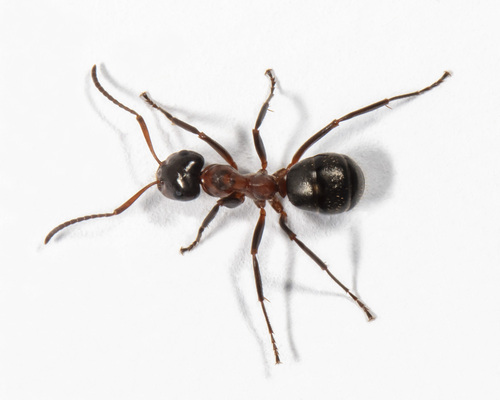
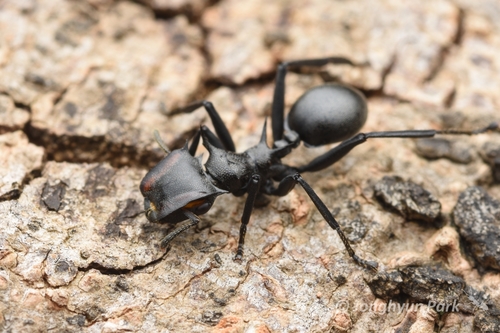
Cephalotes atratus (Linnaeus, 1758) is a large, predominantly black ant. Workers measure 8 to 14 mm (0.3 to 0.6 in) in length, reproductive females reach 20 mm (0.8 in), and males grow up to 14 mm (0.55 in). Males have black heads and thoraxes, with dark reddish-brown gasters and limbs. Worker individuals are spiny, heavily armored, and have powerful mandibles adapted for chewing through wood.
This ant lives in lowland tropical rainforests of South America, with a range that extends from Panama and Venezuela south to Peru, Bolivia, Paraguay, Uruguay, and northern Argentina. It is a common arboreal species, and its colonies can be found in forested areas, parkland with isolated trees, and urban habitats.
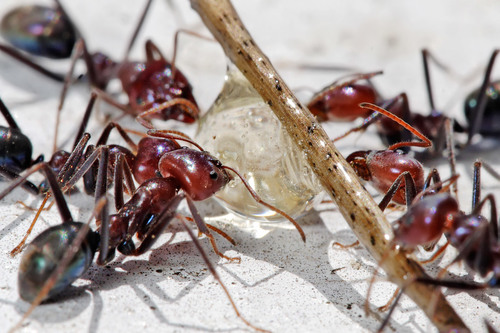
Cephalotes atratus is omnivorous and feeds on whatever resources it can access. A large portion of its diet comes from secretions produced by treehoppers. Foraging ants on the ground collect insect remains from bird droppings, and the species also feeds on carrion and garbage, and will attack other insects. It does not appear to consume plant material. Its heavy armor provides effective protection against predation from similarly sized attackers. In one recorded observation, a troop of the army ant Nomamyrmex esenbeckii attacked a C. atratus colony, and C. atratus workers formed a living wall to defend the nest entrance. They aligned their heavily sclerotized heads to block army ants from entering the colony and reaching their brood.
This ant is the only known definitive host of the nematode parasite Myrmeconema neotropicum. C. atratus workers bring infected bird feces back to the colony to feed to their young. As the ant develops, the nematode also matures and moves to the ant's gaster, located in the abdomen. Adult nematodes mate here, and eggs begin developing inside the female nematode. These developing embryos cause the abdomen of infected ants to turn red. As the eggs develop, older infected ants leave the nest to forage, and their abdomen becomes red and resembles a berry. Frugivorous birds, which act as paratenic hosts, then consume the infected ant abdomen containing the nematode eggs. The eggs are later expelled in the bird's feces, continuing the parasite's life cycle.