About Centronyx bairdii (Audubon, 1844)
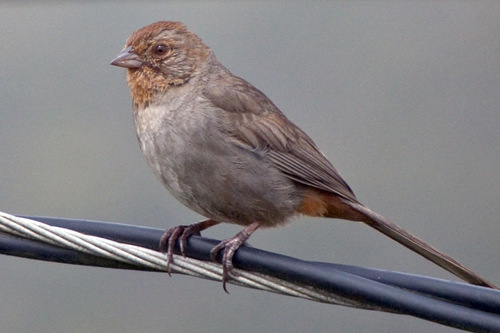
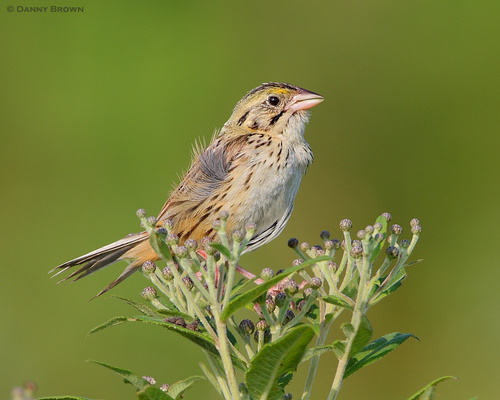
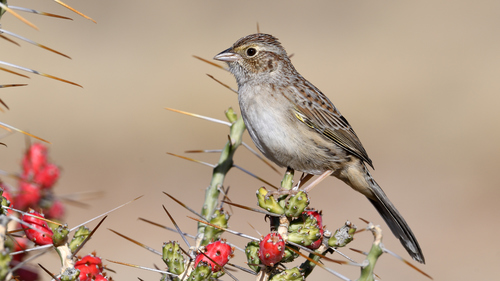
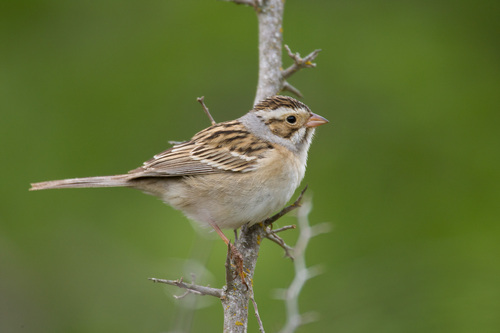
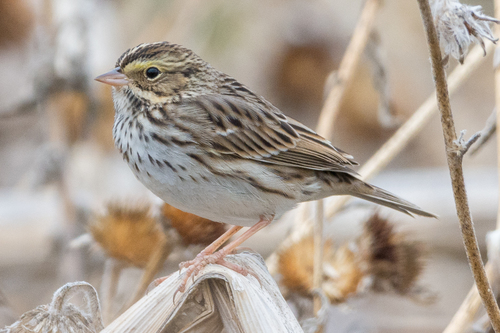
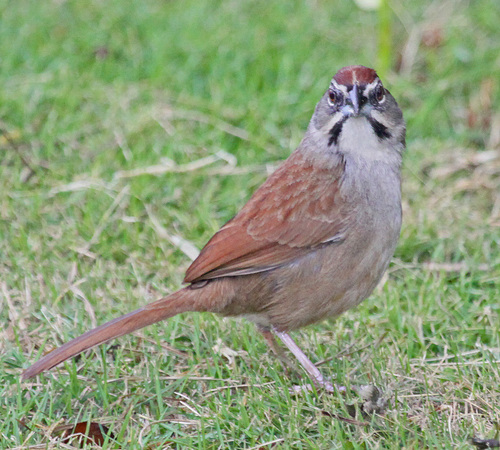
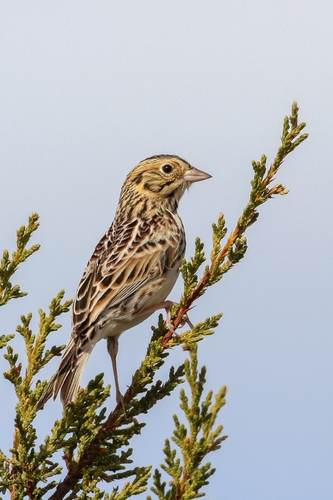
Baird's sparrow (Centronyx bairdii) is a small, brown streaked sparrow. It has yellow-brown faces with subtle black markings, and a narrow band of brown streaks across its chest. A unique broad ochre central crown stripe distinguishes this species from other similar sparrows. Juveniles have similar coloration to adults, but typically show more streaking. Males and females are the same adult size with no sexual dimorphism. Adults average around 12 cm (5 inches) long, weigh 17–21 g (½ to ¾ ounces), and have a wingspan of about 23 cm (9 inches). Baird's sparrows are larger than LeConte's sparrows, and lack the orange facial coloration seen on LeConte's sparrows. They closely match Henslow's sparrows in color and patterning, but do not have green facial coloring like Henslow's sparrows. Savannah sparrows have heavier streaking and an extra white marking on the head that Baird's sparrows do not possess.
This sparrow is migratory: it breeds in the tall grass prairies of north central United States and south central Canada, and winters in northern Mexico and the southern tip of the U.S. near Texas. During migration seasons, they can be seen throughout the U.S. Midwest, and are most abundant in North Dakota, South Dakota, Minnesota, Montana, and southern Canada during summer breeding months. Baird's sparrows live exclusively in grassland habitats, where they depend on the now-diminishing tallgrass prairies, mixed grass prairies, and moister fescue prairies of the northern U.S. and southern Canada. The declining availability of this habitat threatens many species that rely on these prairie ecosystems. Areas with woody vegetation or cultivated land are not suitable habitat for Baird's sparrows.
Baird's sparrows build their nests on the ground, in ground depressions or within tufts of grass. Their nests are constructed from grass, arranged in two layers with finer material lining the inner cavity. They nest in small, loose colonies. A typical clutch holds 2 to 6 white-gray eggs marked with brown spots. Baird's sparrows are altricial, meaning young require parental care to survive after hatching. Breeding population sizes fluctuate each year, most likely due to variable environmental conditions including wildfire, drought, and movement of American bison herds. When threatened by predators, Baird's sparrows most often evade danger by running on foot instead of flying away.