About Cenchrus americanus (L.) Morrone
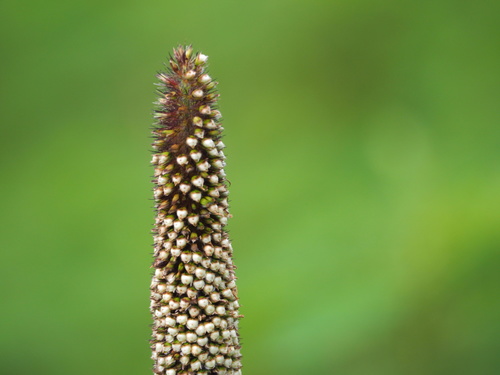
Cenchrus americanus, commonly known as pearl millet, produces ovoid grains 3 to 4 millimeters long. These are the largest kernels among all millet varieties, when sorghum is excluded. Grains can be nearly white, pale yellow, brown, grey, slate blue, or purple. The 1,000-seed weight ranges from 2.5 to 14 g, with an average of 8 g. Mature plant height ranges from 0.5 to 4 meters. Pearl millet accessions in global collections likely have greater variation in physical characteristics than any other type of millet. Kernels can be classified into five shapes: obovate, hexagonal, lanceolate, globular, and elliptical. In Africa, pearl millet is categorized as only globular, lanceolate, or hexagonal. Most millets share very similar basic structures, though they do have some distinct specific differences. Recent archaeobotanical research has confirmed domesticated pearl millet was present in the Sahel zone of northern Mali between 2500 and 2000 BCE. The Sahel zone is this species' center of diversity, and is also the proposed area where it was first domesticated. Pearl millet is well adapted to growing regions with drought, low soil fertility, low moisture, and high temperatures. It grows well in soils that have high salinity or low pH. Because of its tolerance to harsh growing conditions, it can be cultivated in areas where other cereal crops like maize or wheat cannot survive. Pearl millet is a summer annual crop, and is well suited for double cropping and crop rotations. Its grain and forage are valuable as food and feed resources in Africa, Russia, India, and China. Today, pearl millet is grown on over 260,000 square kilometers of land worldwide. It makes up approximately 50% of total global millet production. Global total millet production remained stable during the 1980s. According to the FAO, 39.4 million hectares of millet were planted in 1987, with an average production yield of only 704 kilograms per hectare. In culinary use, pearl millet is most commonly used to make bhakri flatbread. It can also be boiled to make a Tamil porridge called kamban choru or kamban koozh. In Rajasthani cuisine, bajre ki khatti rabdi is a traditional dish made from pearl millet flour and yogurt. Pearl millet flour flatbreads are served with various types of kadhi and bhaaji in meals. In Namibia, pearl millet flour is used to make oshifima, a staple food in northern Namibia. Across Africa, especially in Nigeria and other regions, pearl millet is used to make traditional foods including gruel/porridge, and even local beer. The local alcoholic beverage Burukutu is commonly produced in tropical African countries including Nigeria, Togo, Kenya, Ethiopia, and Burundi, where it is one of the major traditional local alcoholic drinks.