About Cemophora coccinea (Blumenbach, 1788)
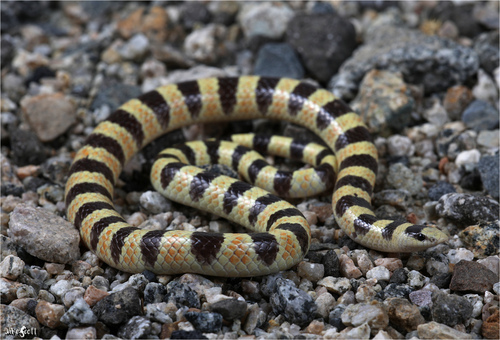
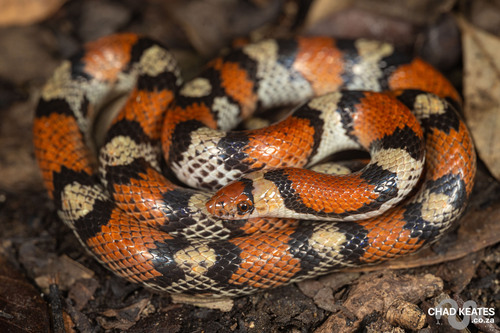
The scarlet snake, scientifically named Cemophora coccinea (Blumenbach, 1788), is a relatively small, semi-fossorial habitat specialist native to the southeastern United States. Adult scarlet snakes reach a total length including the tail of 14–26 inches, or 36–66 cm. Their dorsal body has a light gray base color, with a row of black-bordered red, white, or yellow blotches running down the back. The belly is a uniform light gray or solid white. The dorsal blotches may extend down the body sides, creating a pattern that looks somewhat like bands or rings. This similarity often causes confusion with other species that live in the same region, including venomous coral snakes and the harmless scarlet king snake. The shared pattern between these three snakes is a form of mimicry called Batesian mimicry, where palatable species gain protection from predators by resembling the warning signals of unpalatable or otherwise defended species. C. coccinea is found only within the United States. It is native to peninsular Florida, and also occurs in southeastern Texas, eastern Oklahoma, Arkansas, and parts of Louisiana, Mississippi, Alabama, Georgia, South Carolina, North Carolina, Tennessee, Kentucky, Illinois, Indiana, Virginia, Maryland, and Delaware. Disjunct, separate populations exist in New Jersey and central Missouri. The species is most common across most areas of the Atlantic coastal plain. It prefers open forested habitats with sandy soil, ground litter, and organic debris. In Indiana, the scarlet snake is classified as an endangered species. In New Jersey, the New Jersey Endangered and Nongame Advisory Committee has recommended the species receive threatened status within the state, but no formal rule proposal has been submitted to date. The recommended threatened status is primarily due to population declines and habitat loss. Documented causes of population decline include habitat loss, illegal capture for the pet trade, road mortality, and direct intentional killing. Very little is known about the scarlet snake’s reproductive habits. The species is oviparous, meaning it lays eggs. A typical clutch contains 2 to 9 eggs, with an average clutch size of five eggs. Breeding takes place during the spring months, and females lay eggs during summer in burrows or under rocks. Eggs hatch two months after laying, usually in late summer or autumn. In Florida, one female scarlet snake was recorded laying 13 fertile eggs, a clutch size larger than the previous maximum reported clutch of 9 eggs.