About Celtis paniculata (Endl.) Planch.
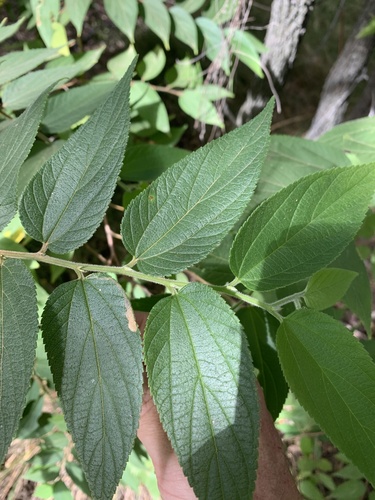
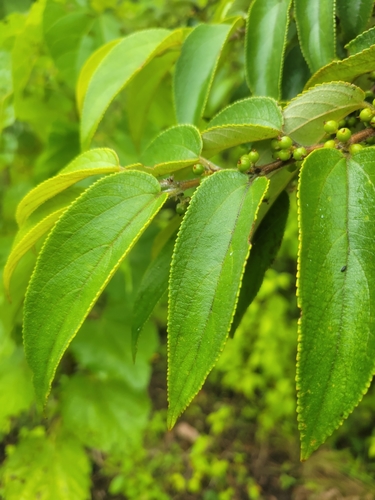
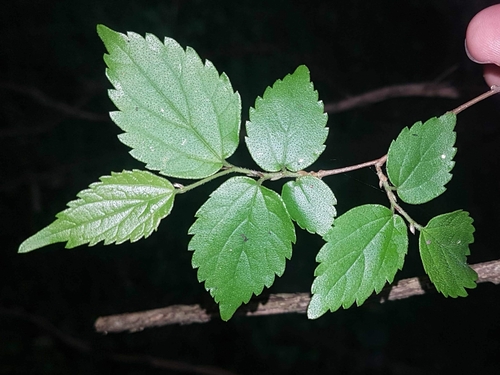
This species is botanically classified as Celtis paniculata (Endl.) Planch. Celtis paniculata is a tree that can grow up to 40 m (130 ft) in height and reach 90 cm (35 in) in trunk width, though most individual trees are much smaller. Its trunk is mostly cylindrical and develops some buttressing at the base. The bark is thin, greyish brown, smooth, and marked with vertical pustular lines. This tree has a broad natural range across tropical Asia and the Pacific, including Borneo, the Moluccas, the Lesser Sunda Islands, the Caroline Islands, New Guinea, the Solomon Islands, Vanuatu, New Caledonia, and Australia’s Northern Territory and Queensland. In Australia, it occurs from Kiama (34° S) in New South Wales north to Cape York Peninsula, and also grows on Norfolk Island. It can grow successfully in many different forest types: sandy beach forests, rainforests, monsoon forests, and sclerophyll forests. It also adapts to a variety of soil types, including soils formed from basalt, granite, and limestone. It is commonly found in coastal regions, but in northern Queensland it can grow at altitudes up to 800 m (2,600 ft). Ecologically, Celtis paniculata acts as a food source for multiple butterfly species, including blue beak, common aeroplane, and tailed emperor butterflies. Many rainforest pigeons and other bird species eat its fruit. An endangered population of the beetle Menippus darcyi feeds on this tree. Celtis paniculata produces a useful general-purpose timber, with a specific gravity of 0.70.