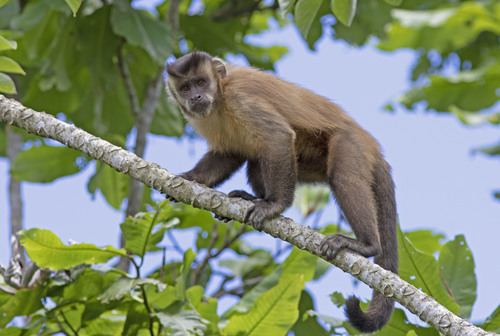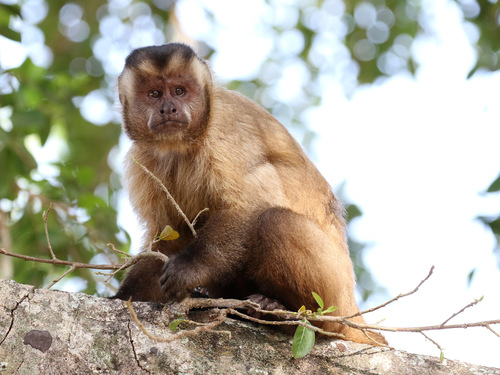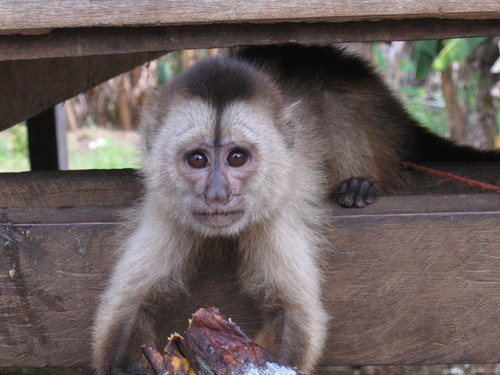
About Cebus olivaceus Schomburgk, 1848
Adult Weight
Adult wedge-capped capuchins (Cebus olivaceus) weigh approximately 3 kg (6.6 lb), with moderate weight variation between sexes.
Etymology
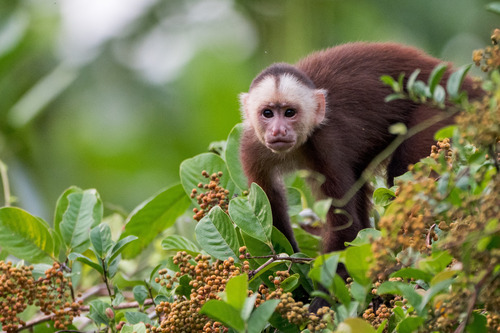
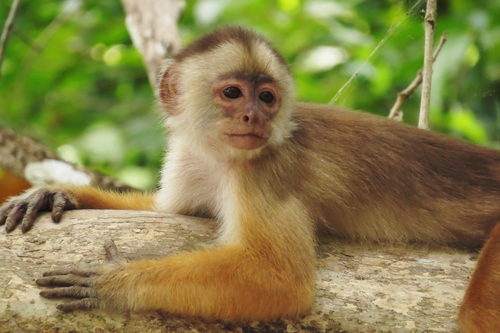
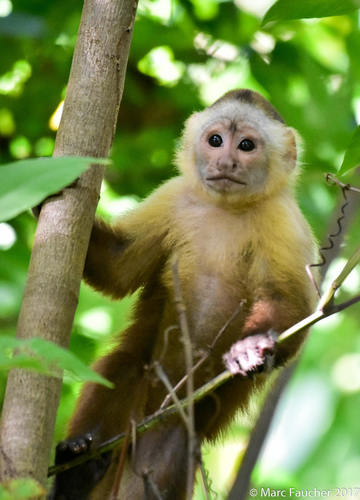
This species gets its common name from a black triangle of dark fur that forms a "wedge cap" centered on its forehead. The wedge cap starts between the eyes and extends backward to cover the top of the head.
Body Fur Coloration
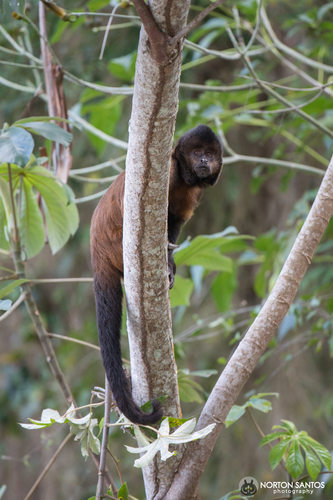
The overall body fur of the species ranges from light brown to brown, with yellow and gray tinges appearing on different parts of the body. Their faces are hairless, surrounded by light brown or blonde fur.
Sexual Dimorphism Levels
Wedge-capped capuchins have similar levels of sexual dimorphism to other capuchin monkey species. On average, males weigh around 30% more than females.
Canine Size Dimorphism
Even after accounting for overall body size differences, males still have relatively longer canines than females. On average, male upper (maxillary) canines are 70% larger than female canines, and male lower (mandibular) canines are 40% larger than female canines. This difference may indicate that male wedge-capped capuchins compete for access to females.
Skeletal Proportion Study
Researchers have compared the skeletal proportions of wedge-capped capuchins and tufted capuchins to explore the relationship between locomotion and bone proportions.
Locomotion Patterns
Wedge-capped capuchins spend relatively more time running and jumping through the forest canopy, while tufted capuchins spend more time walking and moving slowly.
Limb Proportion Adaptation
In line with their more active canopy locomotion, wedge-capped capuchins have relatively longer limbs than tufted capuchins, particularly longer hind limbs.
Preferred Habitat Type
Wedge-capped capuchins prefer undisturbed primary forests that allow them to move through the canopy.
Geographical Habitat Range
They live in rainforests of northern Brazil and Venezuela, as well as drier forests along riverbeds in Guyana. Their available habitats vary in forest height, tree composition, and forest continuity.
Habitat Selection
When given a choice between dense high-canopy primary forests and more fragmented, lower forests, wedge-capped capuchins generally choose to live in primary forests.
Distribution Boundaries
Their range extends north of the Orinoco River, south of the Sierra de Perijá and Venezuelan Coastal Range, and east to the Essequibo River in western Guyana.
Primate Food Washing Behavior
Food washing, an act where primates wash sandy food before eating, has been observed in multiple non-human primate groups including macaques and capuchins, and this behavior has been classified as an example of protoculture.
Food Washing Records in Species
Four spontaneous cases of food washing have been recorded in both captive and wild populations of wedge-capped capuchins.
Food Washing Origin
Researcher Urbani concluded that for this species, food washing is a response to specific circumstantial issues, rather than a behavior acquired through imitation or social learning, as has been argued for the same behavior in other species.