About Ceanothus velutinus Douglas
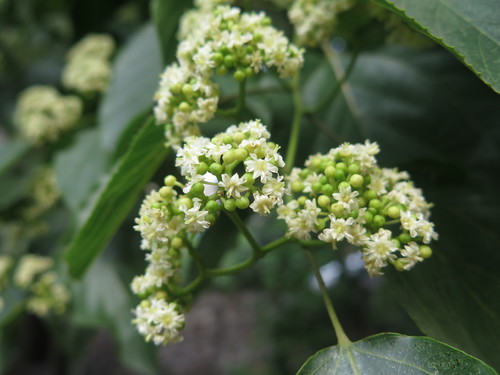
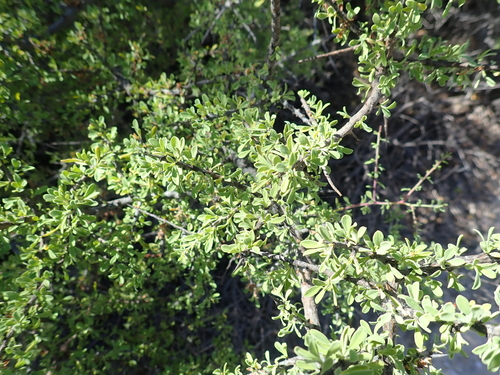
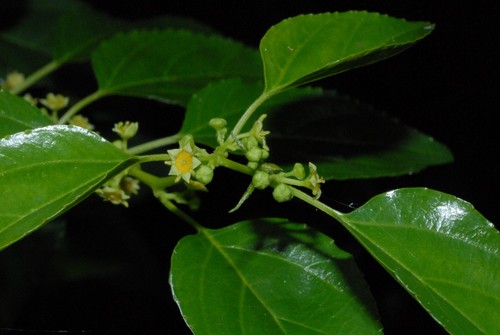
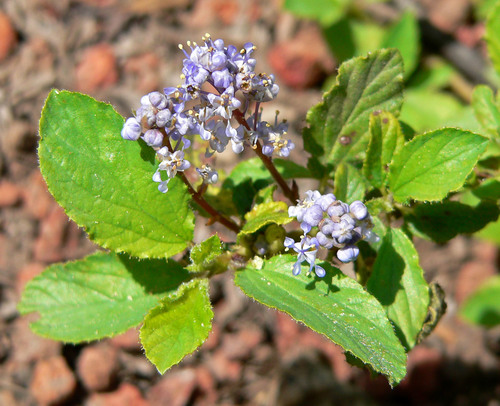
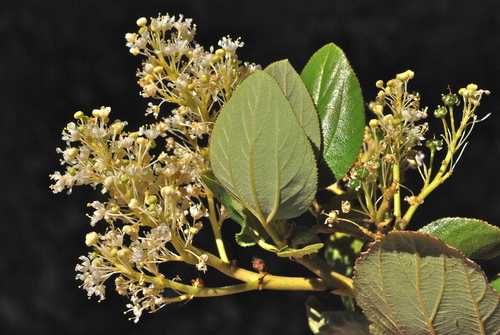
Ceanothus velutinus Douglas is an evergreen shrub that can grow up to 4 meters (13 feet) tall, though most individuals stay under 3 meters. It forms colonies of tangled plants that create nearly impenetrable thickets. Its aromatic leaves are arranged alternately along stems, growing up to 8 centimeters (3 inches) long. The leaves are oval, with tiny glandular teeth along their edges; the upper leaf surface is shiny green and hairless. This species produces abundant long clusters of white flowers, known as inflorescences. Its fruit is a three-lobed capsule a few millimeters long, which opens explosively to eject its three seeds onto the soil. The expelled seeds can stay buried in a seed bank for well over 200 years before sprouting. Each seed has a very hard outer coating that requires scarification, most commonly from wildfire, before it can germinate. Like most other Ceanothus species, Ceanothus velutinus fixes nitrogen through a partnership with actinomycetes that grow in its root nodules.
Ceanothus velutinus is native to western North America, ranging from British Columbia south to California and east to Colorado. It grows in hills and mountain areas across multiple habitat types, including open coniferous forest and chaparral, and it is often found in rocky soils. Deer and elk browse this plant during the winter. Some Plateau Indian tribes drank a boiled preparation of this plant to induce sweating, as a treatment for colds, fevers, and influenza. Rinsing with the plant’s leaves was also used to help prevent dandruff. Many Native American tribes called this species "red root" for the color of its inner root bark, and used it as a medicine to treat lymphatic disorders, ovarian cysts, fibroid tumors, and tonsillitis.