About Ceanothus pauciflorus Moc. & Sessé ex DC.
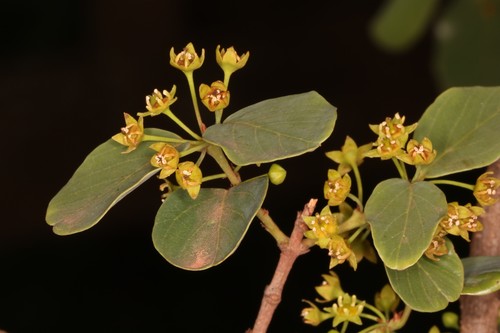
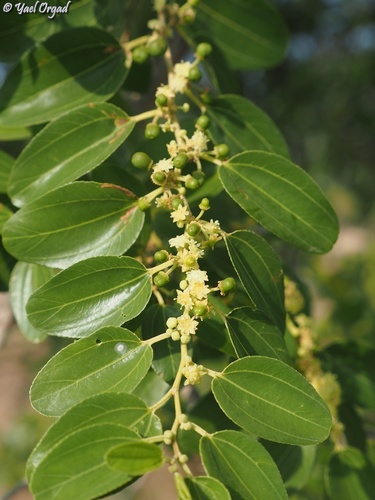
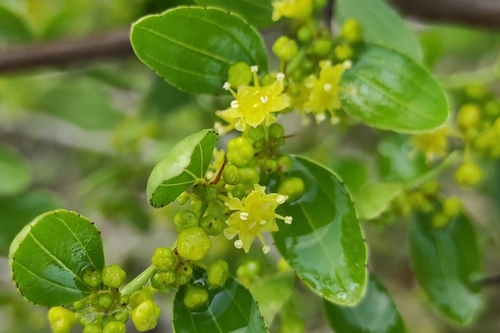
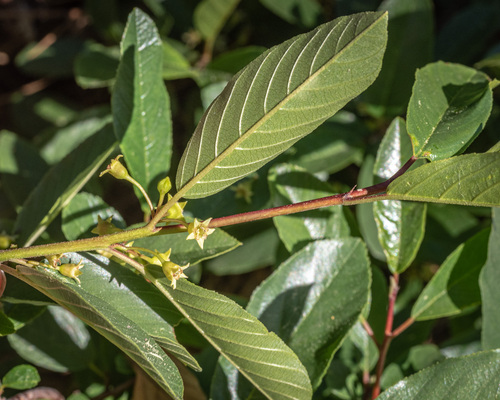
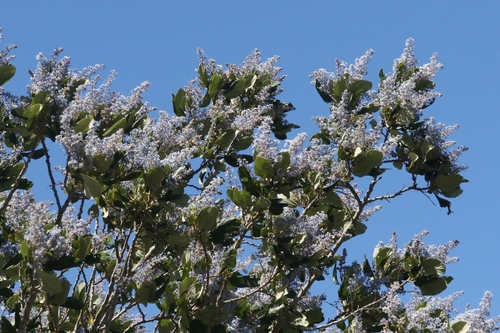
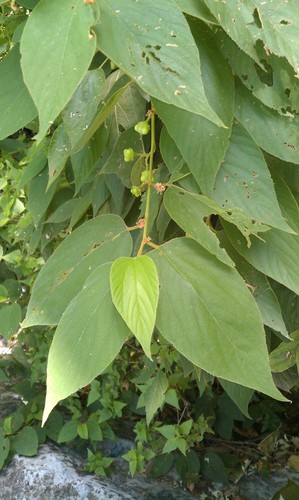
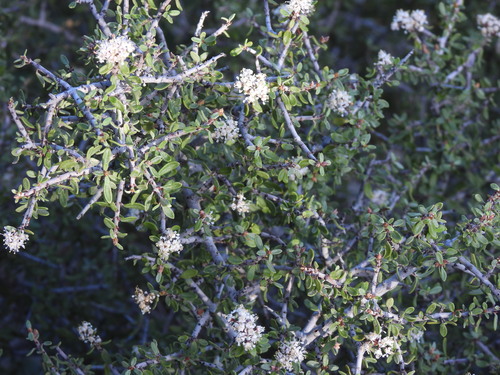
Ceanothus pauciflorus Moc. & Sessé ex DC. is a many-branched shrub with gray, somewhat woolly woody parts. It blooms in spring, and its flowers are highly fragrant. This species is eagerly browsed by livestock and wild ungulates including mule deer and desert bighorn sheep. Morphologically, it is a shrub growing 0.2 to 4 meters tall. Its stems are ascending to erect, and generally branch from at or near the base. Twigs range from pale gray to off-white, and are densely puberulent to short-tomentose. The evergreen leaves are oppositely arranged, borne on a 1 to 3 mm long petiole, with a leaf blade 5 to 20 mm long by 3 to 19 mm wide. The upper (adaxial) leaf surface is concave, colored gray-green to yellow-green, and puberulent, becoming smooth (glabrous) as it ages. The lower (abaxial) leaf surface is convex, gray-green, and either glabrous or covered in short, curly hairs. Leaf tips are usually shaped acute to obtuse, leaf margins may bear teeth, and the stipule forms a knob-like structure. The inflorescence is a small cluster (less than 2 cm long) of many white flowers growing on short lateral branches. The fruit is a horned capsule a few millimeters wide that bursts explosively to expel its three internal seeds; these seeds require thermal scarification from wildfire before they can germinate. This species is widely distributed across the southwestern United States and northern Mexico. In the United States, it occurs in Arizona, California, Nevada, New Mexico, Texas, and Utah. In Mexico, it is widespread from Baja California and Coahuila south to Oaxaca; in Baja California, it grows from the Sierra Juarez to the Sierra de la Asamblea. Across a portion of its shared range in California and Baja California, Ceanothus pauciflorus is replaced by its close relative Ceanothus perplexans. Over its wide distribution, Ceanothus pauciflorus grows in a variety of habitats, and is almost always found in shrub-dominated communities such as chaparral and matorral, at moderate to high elevations between 550 and 2600 m.