About Ceanothus fendleri A.Gray
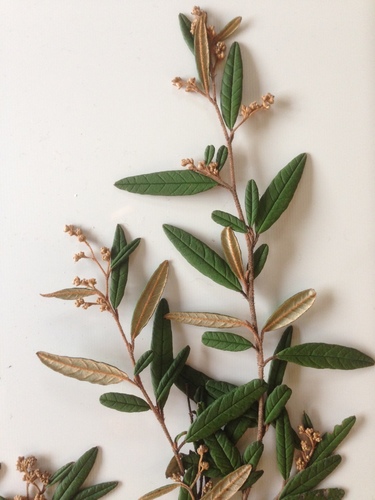
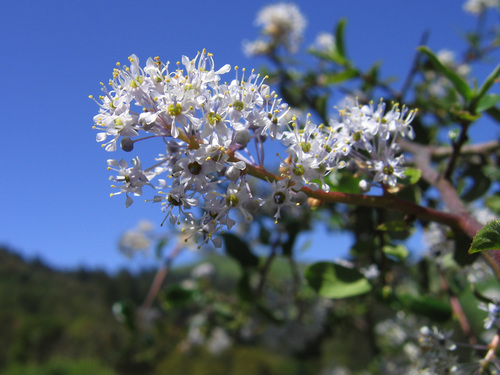
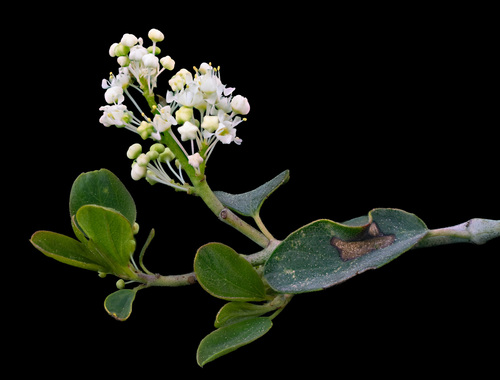
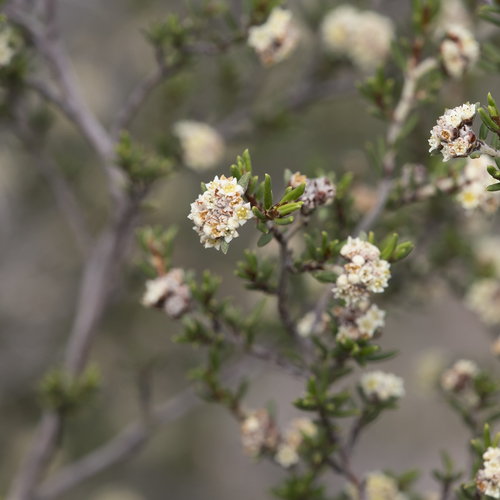
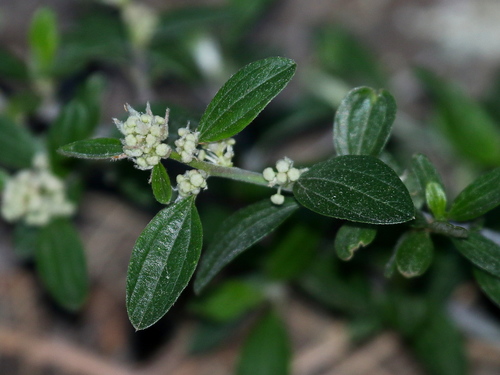
Fendler's ceanothus, Ceanothus fendleri A.Gray, rarely grows taller than 1 meter (3.3 feet). Young stems and twigs are grayish green, while mature stems and twigs are reddish brown. The shrub is armed with spines that can grow up to 2.5 cm (0.98 inches) long. Its leaves are green, thick, and have three veins originating from the base. The small white flowers measure around 2 mm across, grow in thick clusters that emerge from leaf axils, and are most common on older stems. All flowers open at the same time, covering the entire plant in bloom. Flowering typically occurs in June or July, but can happen any time between April and October depending on local altitude and weather conditions. Like other ceanothus species, this plant has five spoon-shaped or hooded petals, each partially covering one stamen. The fruits are three-celled capsules that are pink and glossy. They form a shape roughly like a rounded equilateral triangle, with the stem positioned at the center. Fruits typically ripen in August and September. When the dried pods are dry, they undergo explosive dehiscence that forcefully ejects their seeds. The seeds are glossy dark brown and approximately 2 mm across.