About Ceanothus americanus L.
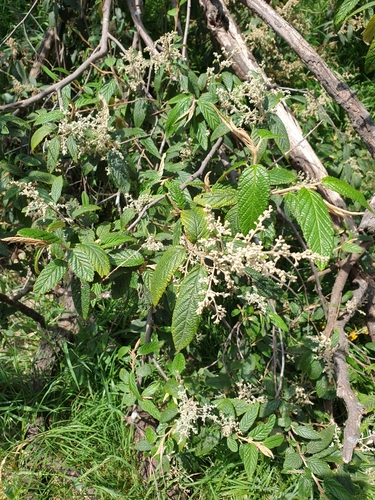
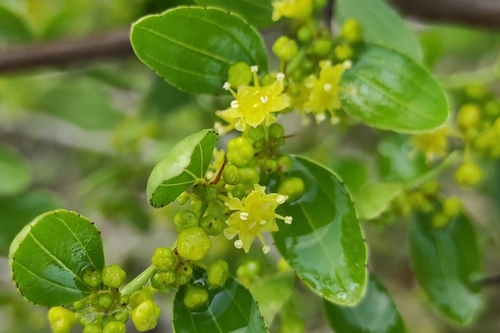
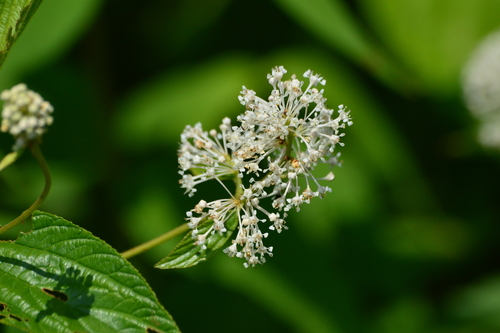
Ceanothus americanus L. is a shrub with a maximum lifespan of fifteen years. It grows between 18 and 42 inches (0.5 and 1 meter) high, and produces many thin branches. Its root system is thick with fibrous root hairs near the soil surface, but also has stout, coarse, woody roots that extend deep into the ground. Wild root systems often grow very large to compensate for repeated wildfire exposure. Its white flowers form clumpy inflorescences on long, axillary peduncles. Its fruits are dry, dehiscent seed capsules. This species is common in dry plains, prairies, and other similar untreed areas, growing on sandy or rocky soils. It is also frequently found in forest clearings, forest verges, banks, lakeshores, and on gentle slopes. Ceanothus americanus occurs in Canada in the provinces of Ontario and Quebec. In the United States, it is found in Alabama, Arkansas, Connecticut, Delaware, northern and central Florida, Georgia, Illinois, Indiana, Iowa, Kansas, Louisiana, Maine (only in Oxford and Penobscot counties), Maryland, Massachusetts, Michigan, Minnesota, Mississippi, Missouri, Nebraska, New Hampshire, New Jersey, New York, North Carolina, Ohio, Oklahoma, Pennsylvania, Rhode Island, South Carolina, eastern and central Texas, Vermont, Virginia, West Virginia, and Wisconsin. In the Missouri Ozarks, local deer seek out this shrub's twigs as food during winter; specifically, white-tailed deer (Odocoileus virginianus) browse Ceanothus americanus year-round. Deer, rabbits, and elk commonly browse its leaves. The flowers are eaten by butterflies of the genus Celastrina, including spring azure and summer azure, and the shoots serve as host for these butterflies' larvae. It also serves as a food source for the butterflies Erynnis martialis (mottled duskywing) and Erynnis icelus (dreamy duskywing). Wild turkeys and quail consume the seeds of Ceanothus americanus. This shrub is highly tolerant of drought and fire. When fire kills its above-ground growth, it resprouts vigorously from the undamaged rootstock. Fire is used as a management technique to support the spread of this species; with repeated fires, it can become a dominant species alongside prairie grasses. It can also colonize burned areas where it was previously absent or rare before the fire. The red roots and root bark of this plant, commonly called New Jersey tea, were used by North American Native Americans to treat upper respiratory tract infections. They also used the roots in washes for syphilis and cancer, and other parts of the plant to treat dysentery, gonorrhea, and eye problems in children. The leaves have a fresh wintergreen scent; European colonists later used the leaves as a tea substitute and a stimulating caffeine-free beverage, most notably during the American Revolution. Modern herbalists still use the plant's root bark, particularly in remedies for lymph system issues. The root contains astringent tannins and multiple peptide alkaloids, including ceanothine A-E, pandamine, zizyphine, scutianine, and the adouetines. These alkaloids have a mild hypotensive effect. Extracts from the roots and flowers can also be used as dyes.